
Understanding how visitors interact with your website isn't just beneficial-it's essential for business growth in 2026. Website analytics refers to the systematic collection, measurement, and analysis of web data to understand and optimize online presence. For European businesses, this practice has evolved significantly beyond simple page view counting, now encompassing sophisticated tracking methods that respect user privacy whilst delivering actionable insights. Modern website analytics solutions must balance thorough data collection with strict regulatory compliance, particularly under GDPR frameworks that govern European digital operations.
Why Website Analytics Matters for Modern Businesses
Every click, scroll, and conversion on your website tells a story about your audience's behaviour and preferences. Website analytics provides the framework to capture these digital footprints and transform them into strategic decisions.
Business owners gain several critical advantages from implementing solid website analytics systems:
- Real-time visibility into website performance and visitor behaviour
- Data-driven insights for marketing campaign optimization
- Identification of high-performing content and conversion pathways
- Understanding of audience demographics and geographic distribution
- Detection of technical issues affecting user experience
The detailed comparison of web analytics tools demonstrates that organisations using website analytics strategically outperform competitors who rely on intuition alone. European enterprises face unique challenges, requiring solutions that comply with regional data protection regulations whilst still offering full tracking capabilities.

The Evolution of Web Tracking Technologies
Traditional website analytics implementations relied heavily on third-party cookies, creating privacy concerns and compliance challenges. Modern approaches have shifted towards server-side tracking, first-party data collection, and cookieless analytics methodologies.
Server-side tracking processes data on your own infrastructure before sending anonymized information to analytics platforms. This approach enhances data accuracy by bypassing ad blockers and browser restrictions that increasingly limit client-side tracking scripts.
First-party data strategies collect information directly from user interactions with your properties, eliminating dependencies on external tracking networks. This methodology aligns perfectly with European data sovereignty requirements, ensuring complete control over data storage locations and processing activities.
Essential Metrics Every Website Analytics Dashboard Should Track
Selecting the right metrics determines whether your website analytics implementation delivers genuine business value or merely generates noise. Web analytics best practices emphasize focusing on metrics aligned with specific business objectives rather than vanity numbers.
Metric Category | Key Indicators | Business Value |
|---|---|---|
Audience | Unique visitors, sessions, geographic distribution | Understanding reach and market penetration |
Behaviour | Page views, time on site, bounce rate | Measuring engagement and content effectiveness |
Acquisition | Traffic sources, campaign performance, referrals | Evaluating marketing channel effectiveness |
Conversion | Goal completions, conversion rates, revenue | Tracking business outcomes and ROI |
Traffic Source Analysis
Understanding where your visitors originate reveals which marketing channels deserve increased investment. Website analytics platforms categorize traffic into organic search, direct visits, referral links, social media, and paid advertising.
Organic search traffic indicates SEO effectiveness and content relevance to user queries. Monitoring keyword rankings alongside organic sessions helps identify opportunities for SEO optimization and content expansion.
Direct traffic patterns often reflect brand awareness and returning visitor loyalty. Spikes in direct visits following marketing campaigns demonstrate offline-to-online attribution success.
Social media referrals require careful analysis, as not all platforms generate equal conversion rates. Website analytics data reveals which social channels drive engaged visitors versus superficial traffic.
User Engagement Indicators
Engagement metrics measure how effectively your content captures and retains visitor attention. Time on site, pages per session, and scroll depth provide nuanced understanding beyond simple page view counts.
Bounce rate analysis identifies pages failing to engage visitors, though interpretation requires context. High bounce rates on contact pages may indicate successful goal completion rather than poor performance.
Session duration combined with conversion data reveals whether visitors find what they need quickly (efficient navigation) or struggle to locate information (poor user experience). Website analytics platforms should segment these metrics by device type, as mobile and desktop users exhibit different behavioural patterns.
Privacy-Compliant Website Analytics Implementation
European businesses operating under GDPR must implement website analytics solutions that respect user privacy whilst maintaining analytical capabilities. Regulation has fundamentally changed which tracking practices are acceptable.
Cookieless Analytics Approaches
Modern website analytics platforms increasingly offer cookieless tracking methodologies that eliminate consent banner requirements whilst still collecting reliable data. These systems utilize server-side fingerprinting, session-based tracking, and aggregated data analysis.
Zero-cookie implementations track visitor sessions without storing persistent identifiers on user devices. This approach maintains user anonymity whilst enabling accurate session counting, page view tracking, and conversion measurement.
For European enterprises requiring complete data sovereignty, platforms that store information exclusively within EU data centres eliminate cross-border data transfer complications. Web Analytics for European Businesses provides precisely this infrastructure, ensuring GDPR compliance without sacrificing analytical depth.
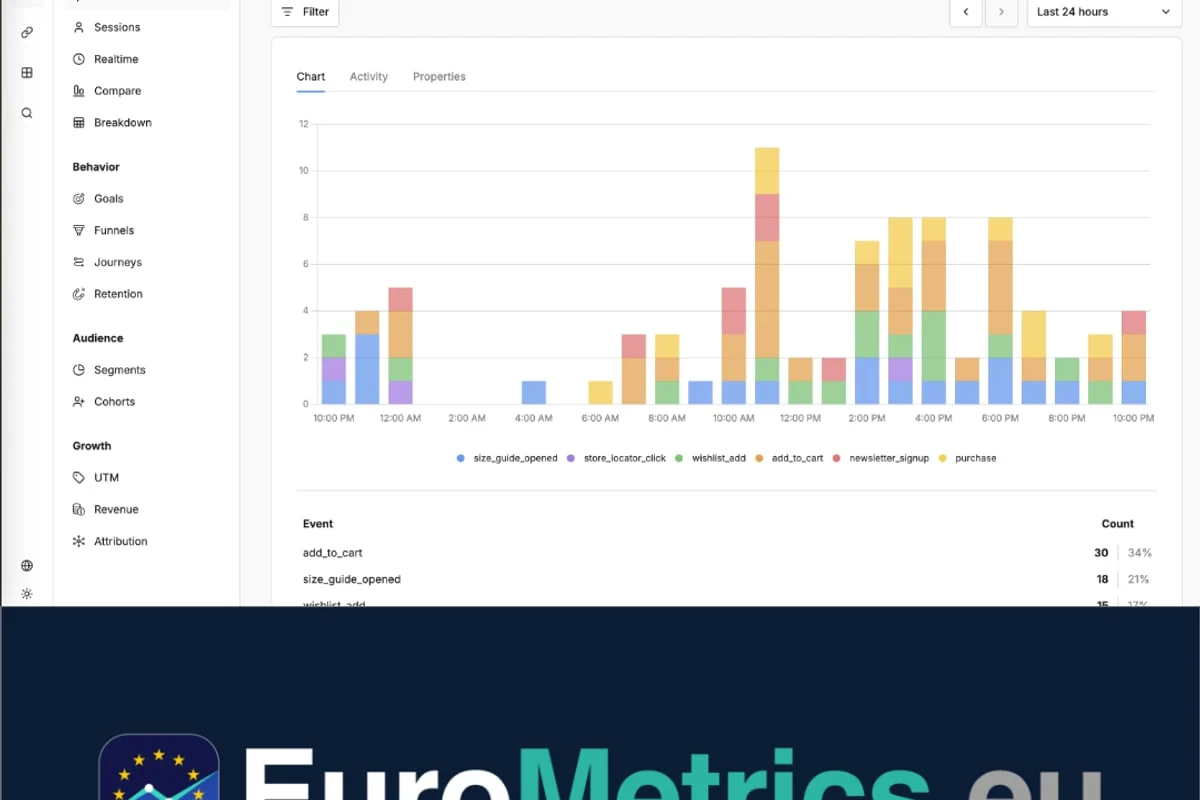
The academic research on enterprise web analytics frameworks highlights how modern systems can achieve full tracking whilst maintaining privacy compliance through architectural design choices rather than post-collection anonymization.

Data Retention and Processing Transparency
Website analytics implementations must clearly document what data gets collected, how long it's retained, and who can access it. Transparency builds user trust whilst satisfying regulatory disclosure requirements.
Data minimization principles dictate collecting only information necessary for stated analytical purposes. Modern platforms allow granular control over tracked data points, enabling businesses to disable unnecessary collection whilst retaining essential metrics.
Processing location guarantees matter significantly for European compliance. Website analytics solutions processing data exclusively on European infrastructure eliminate concerns about foreign surveillance laws and adequacy decisions affecting international data transfers.
Choosing the Right Website Analytics Platform
The proliferation of analytics tools creates both opportunity and confusion for businesses selecting platforms. Comparing web analytics tools requires evaluating features against specific business requirements rather than adopting popular solutions by default.
Enterprise vs. Small Business Requirements
Large organizations need website analytics platforms supporting multiple properties, user roles, custom reporting, and API integrations. Small businesses benefit from simplified interfaces focusing on essential metrics without overwhelming complexity.
- Enterprise features: Custom dimensions, data sampling controls, advanced segmentation, multi-channel attribution
- Small business priorities: Real-time dashboards, automated reports, simple setup, affordable pricing
- Universal requirements: Accurate data, GDPR compliance, reliable uptime, responsive support
Integration capabilities determine how effectively website analytics platforms connect with existing marketing technology stacks. CRM synchronization, email marketing platform connections, and e-commerce system integration enable holistic customer journey analysis.
Technical implementation complexity varies dramatically between platforms. Some require extensive JavaScript customization and developer resources, whilst others offer plug-and-play installation requiring minimal technical expertise.
Cost Structures and Scalability
Website analytics pricing models range from free tiers with limited features to enterprise contracts costing thousands monthly. Understanding cost structures prevents budget surprises as traffic volumes grow.
Pricing Model | Typical Structure | Best For |
|---|---|---|
Free | Feature limitations, data caps | Testing, low-traffic sites |
Subscription | Fixed monthly fee, usage tiers | Predictable costs, moderate traffic |
Pay-per-event | Charge per tracked action | Variable traffic, seasonal businesses |
Enterprise | Custom negotiated pricing | High volume, custom requirements |
Scalability considerations ensure your website analytics platform grows alongside your business without requiring platform migration. Evaluate whether pricing increases linearly with traffic or includes sudden tier jumps that create budget shocks.
Advanced Website Analytics Techniques
Beyond basic traffic monitoring, sophisticated website analytics implementations use advanced methodologies to extract deeper insights and predict future trends.
Conversion Funnel Analysis
Mapping the complete customer journey from initial visit through conversion reveals where prospects abandon the process. Website analytics platforms visualize these funnels, highlighting optimization opportunities.
Multi-step funnels track progression through complex processes like e-commerce checkout sequences or lead generation forms. Identifying the highest drop-off points focuses improvement efforts where they'll generate maximum impact.
Segment analysis compares funnel performance across traffic sources, device types, and audience demographics. Mobile users might abandon at different stages than desktop visitors, requiring device-specific optimization strategies.
Event Tracking and Custom Goals
Generic page view tracking provides limited insight into specific user actions. Website analytics event tracking monitors button clicks, video plays, document downloads, and other meaningful interactions.
Custom event configuration tailors tracking to your unique business model. SaaS platforms might track feature usage, whilst content publishers monitor reading depth and social sharing.
Goal tracking assigns values to specific conversions, enabling ROI calculation for marketing activities. Website analytics platforms supporting multiple goal types allow sophisticated attribution modeling across touchpoints.
Audience Segmentation Strategies
Treating all visitors identically obscures important behavioural differences between audience segments. Website analytics segmentation reveals how distinct groups interact with your website.
- Demographic segmentation: Age, location, language preferences
- Behavioural segmentation: New vs. returning visitors, engagement levels
- Technological segmentation: Device types, browsers, operating systems
- Acquisition segmentation: Traffic sources, campaigns, referral paths
Custom audience creation combines multiple dimensions to identify high-value visitor segments. Returning visitors from organic search who engage deeply with product pages represent prime conversion candidates deserving targeted remarketing.

Real-Time Analytics and Alerting
Modern website analytics platforms provide instant visibility into current website activity rather than historical reporting alone. Real-time dashboards enable immediate response to emerging trends or technical issues.
Live visitor monitoring shows active sessions, page views per minute, and real-time conversion tracking. E-commerce businesses use this capability to monitor campaign launches and promotional events.
Automated alerting systems notify stakeholders when metrics exceed predefined thresholds. Traffic spikes might indicate viral content success or DDoS attacks, requiring different responses based on accompanying metrics.
The best practices for website analytics emphasize establishing baseline metrics to calibrate meaningful alerts, preventing notification fatigue from trivial fluctuations.
Performance Correlation Analysis
Website analytics data becomes more valuable when correlated with website performance metrics. Slow page load times directly impact bounce rates and conversion percentages.
Speed monitoring integration connects site performance data with user behaviour patterns, revealing how technical issues affect business outcomes. A one-second delay in page rendering might correlate with significant revenue reduction.
Uptime tracking alignment ensures you understand traffic patterns during service disruptions. Website analytics platforms should exclude downtime periods from average calculations to prevent skewed metrics.
Data Visualization and Reporting Best Practices
Collecting website analytics data provides no value without effective communication to stakeholders. Analytics best practices emphasize clear visualization and actionable reporting formats.
Dashboard Design Principles
Executive dashboards prioritize high-level KPIs requiring immediate attention, whilst operational dashboards provide detailed metrics for specific functions. Website analytics interfaces should support multiple view types serving different audiences.
Visual hierarchy guides attention to critical metrics through size, colour, and positioning. Dramatic conversion rate drops deserve prominent placement, whilst stable metrics occupy secondary positions.
Contextual comparisons add meaning to raw numbers. Stating 10,000 monthly visitors provides less insight than showing 25% growth versus previous periods or comparison against industry benchmarks.
Automated Reporting Workflows
Manual report generation wastes valuable time better spent analyzing insights. Website analytics platforms offering scheduled reports ensure stakeholders receive regular updates without analyst intervention.
- Daily snapshots: Key metrics for operational monitoring
- Weekly summaries: Trend identification and anomaly detection
- Monthly reviews: Strategic performance assessment and planning
- Quarterly deep dives: Full analysis and goal setting
Custom report templates standardize communication whilst allowing flexibility for specific analytical questions. The detailed documentation provided by modern analytics platforms helps users create effective reporting workflows.
Integrating Website Analytics into Business Strategy
Data collection serves strategic objectives rather than existing for its own sake. Website analytics implementation should directly support business decision-making processes.
Marketing Campaign Attribution
Understanding which marketing activities generate valuable traffic and conversions determines budget allocation effectiveness. Website analytics platforms track campaign parameters through UTM codes and custom tracking links.
Multi-touch attribution modeling assigns conversion credit across multiple customer touchpoints rather than crediting only the final interaction. First-click, last-click, linear, and time-decay models each provide different perspectives on campaign contribution.
Campaign URL builders ensure consistent parameter tracking across marketing channels. The campaign URL builder tool simplifies creating properly tagged links for accurate source attribution.
Content Performance Optimization
Website analytics data reveals which content formats, topics, and presentation styles resonate with audiences. Publishing decisions informed by actual performance metrics outperform editorial intuition.
Content grouping aggregates related pages to identify successful content categories deserving expansion. Blog posts, product pages, and resource libraries each serve distinct purposes measurable through specific engagement metrics.
Bounce rate combined with time on page distinguishes genuinely engaging content from pages failing to deliver expected value. High engagement scores justify content promotion through internal linking and social distribution.
Technical Implementation Considerations
Deploying website analytics platforms requires attention to technical details affecting data accuracy and website performance. Improper implementation compromises analytical reliability whilst potentially degrading user experience.
Tracking Code Installation
JavaScript tracking snippets must load reliably without blocking page rendering. Website analytics best practices recommend asynchronous loading and placement immediately before the closing body tag.
Tag management systems centralize tracking code deployment across multiple analytics platforms and marketing tools. These systems prevent conflicting scripts and enable non-technical users to manage tracking implementations.
Server-side tracking alternatives eliminate client-side JavaScript dependencies, improving data accuracy by bypassing ad blockers and browser privacy features. This approach requires server infrastructure supporting tracking code execution.
Data Accuracy and Validation
Website analytics platforms occasionally report incorrect data due to implementation errors, bot traffic, or tracking anomalies. Regular validation ensures reported metrics reflect genuine user behaviour.
- Traffic pattern consistency: Sudden unexplained changes indicate tracking problems
- Cross-platform verification: Compare multiple data sources for confirmation
- Filter configuration: Exclude internal traffic and known bot signatures
- Goal tracking validation: Test conversion tracking in staging environments
Bot filtering capabilities vary significantly between website analytics platforms. Sophisticated solutions identify and exclude automated traffic whilst preserving legitimate monitoring services.
Privacy Controls and User Consent
Cookie-based website analytics implementations typically require consent banners under GDPR, though cookieless alternatives eliminate this requirement. Understanding legal obligations prevents compliance violations.
Consent management platforms integrate with analytics tools to respect user preferences regarding data collection. These systems pause tracking until appropriate consent gets obtained, then resume normal operation.
Data anonymization features remove personally identifiable information from collected data. IP address truncation, user ID hashing, and geographic aggregation maintain privacy whilst preserving analytical utility.
Future Trends in Website Analytics Technology
Analytics continues to evolve rapidly, driven by privacy regulations, technological advancement, and changing user expectations. Forward-thinking businesses anticipate these trends when selecting platforms.
Artificial Intelligence Integration
Machine learning algorithms increasingly automate insight discovery within website analytics platforms. Anomaly detection, predictive analytics, and automated recommendations reduce manual analysis requirements.
Predictive traffic modeling forecasts future visitor volumes based on historical patterns, seasonality, and external factors. This capability supports capacity planning and resource allocation decisions.
Automated insight generation highlights significant metric changes and correlations that human analysts might overlook. AI-powered website analytics platforms surface actionable recommendations rather than simply presenting raw data.
Enhanced Privacy Technologies
Regulatory pressure and user expectations drive continuous innovation in privacy-preserving analytics methodologies. Differential privacy, federated learning, and homomorphic encryption represent emerging techniques balancing insight with anonymity.
Edge computing approaches process analytics data on user devices before transmitting only aggregated insights to central servers. This architecture minimizes data exposure whilst maintaining analytical capabilities.
Decentralized analytics frameworks distribute data processing across networks, preventing any single entity from accessing complete user profiles. These systems align with Web3 principles gaining traction across European digital communities.
Modern website analytics implementation balances thorough tracking with privacy compliance, delivering actionable insights without compromising user trust. European businesses require solutions respecting data sovereignty whilst providing analytical depth comparable to global platforms. EuroMetrics delivers precisely this combination through cookieless tracking, EU-exclusive data storage, and intuitive dashboards designed for European enterprises. Discover how privacy-first analytics can transform your digital strategy whilst maintaining complete GDPR compliance.
Article written using RankPill.