
Understanding how GA cookies function is essential for any European business running a website in 2026. These small text files enable analytics platforms to track visitor behaviour, measure campaign performance, and gather insights about audience demographics. However, digital tracking has shifted dramatically with stricter privacy regulations and growing user awareness about data collection. European businesses now face the challenge of balancing detailed analytics with privacy requirements, so they need to understand exactly what GA cookies collect and how they impact both users and website owners.
What Are GA Cookies and How Do They Work
GA cookies are small data files that analytics platforms place on visitors' browsers to track their interactions with websites. When someone visits a site using traditional analytics tools, these cookies create a unique identifier that follows the user across multiple sessions and pages.
The primary purpose of GA cookies is to distinguish between new and returning visitors, track session duration, and measure engagement metrics. These cookies enable Google Analytics to track user behaviour by storing information locally on the user's device and sending that data back to analytics servers.

Types of GA Cookies
Different analytics cookies serve distinct purposes within the tracking ecosystem:
- _ga – Distinguishes unique visitors and expires after 2 years
- _gid – Distinguishes unique visitors and expires after 24 hours
- _gat – Throttles request rates and expires after 1 minute
- ga – Persists session state in newer implementations
Each cookie type collects specific data points. The _ga cookie generates a unique client identifier, whilst the _gid provides a shorter-term tracking mechanism. These identifiers work together to create a detailed picture of user behaviour across time.
First-Party vs Third-Party Cookies
The distinction between first-party and third-party GA cookies carries significant implications for privacy and functionality. First-party cookies are set by the domain the user is visiting, whilst third-party cookies originate from external domains.
Traditional analytics platforms primarily use first-party cookies, which browsers are less likely to block. However, when analytics scripts load resources from external domains or when data is shared across multiple properties, third-party cookies may enter the equation. This distinction matters for both tracking accuracy and regulatory compliance.
Data Collection Through GA Cookies
GA cookies capture an extensive range of visitor information that goes far beyond simple page views. Understanding what data these cookies collect helps businesses assess privacy risks and compliance obligations.
Data Type | Information Collected | Retention Period |
|---|---|---|
User Identity | Client ID, Session ID | Up to 2 years |
Behaviour | Pages viewed, time on site, clicks | Session-based |
Technical | Browser, device, screen resolution | Session-based |
Traffic Source | Referrer, campaign parameters, search terms | Session-based |
The client identifier created by GA cookies enables cross-session tracking. This means analytics platforms can recognize when the same person returns to a website days, weeks, or months later. The system tracks browsing patterns, conversion paths, and engagement metrics with considerable precision.
Session data reveals how visitors navigate through content. GA cookies record the sequence of pages viewed, time spent on each page, and interactions with site elements. This granular tracking extends to form submissions, video plays, downloads, and custom events that website owners configure.
Location and Demographic Inference
Whilst GA cookies themselves don't directly store location data, the information they collect combines with IP addresses to infer geographic location and demographic attributes. Analytics platforms use this aggregated data to provide audience insights about age ranges, gender, and interests.
This inference process raises privacy concerns because it creates detailed user profiles without explicit data collection. The combination of cookie identifiers with server-side data processing enables sophisticated audience segmentation that many users don't fully understand.
Privacy Implications and GDPR Considerations
The use of GA cookies in Europe carries substantial legal and ethical implications. Cookie consent requirements under GDPR have transformed how websites must approach analytics implementation.
European privacy regulations classify GA cookies as non-essential because they serve marketing and analytics purposes rather than core website functionality. This classification means websites must obtain explicit consent before setting these cookies on visitors' browsers.
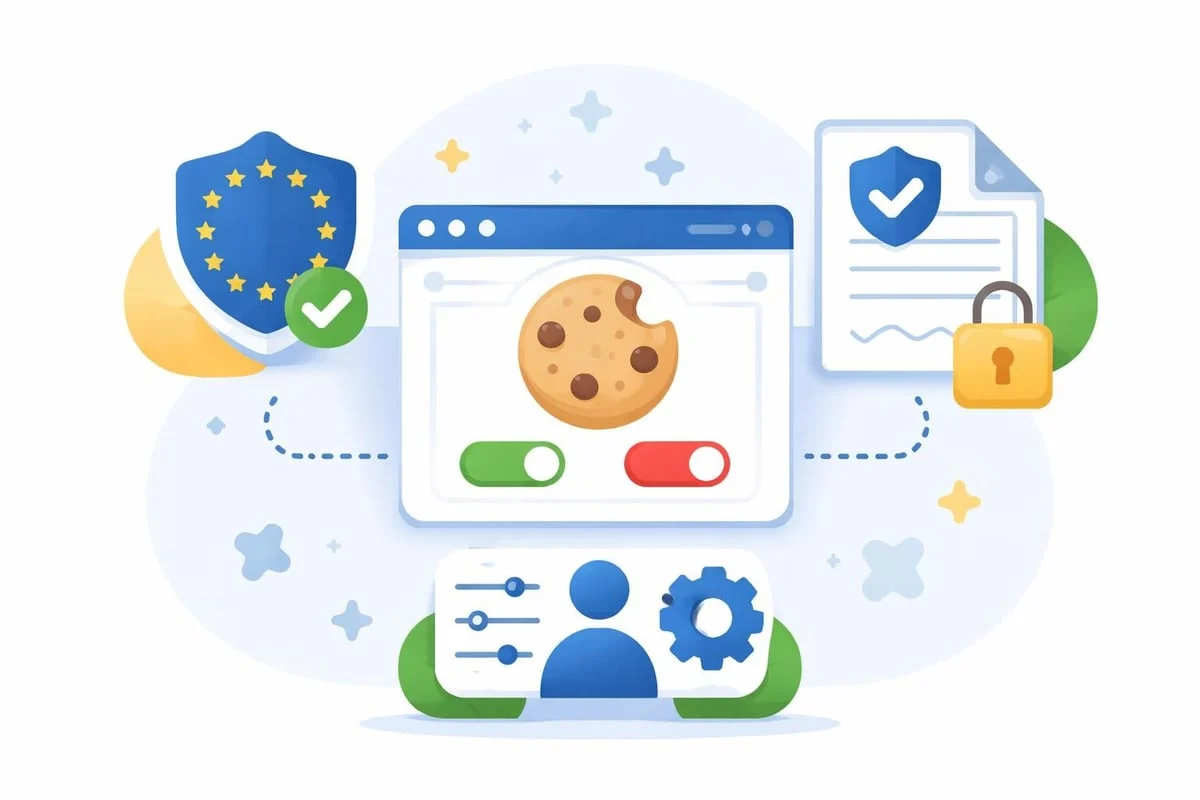
Consent Management Requirements
Implementing compliant consent management involves several critical steps:
- Display cookie notices before setting any non-essential cookies
- Provide clear information about what data GA cookies collect
- Offer genuine choice with easy opt-out mechanisms
- Document consent decisions and maintain audit trails
- Honour user preferences across sessions
The consent burden creates friction in the user experience. Visitors encounter pop-ups requesting permission before analytics can function, and many users decline tracking entirely. This results in incomplete data sets that may not accurately represent total website traffic.
Data Transfer Concerns
Beyond consent requirements, European businesses face additional challenges regarding where GA cookie data is processed and stored. Many traditional analytics platforms transfer data to servers outside the EU, raising questions about data sovereignty and compliance with cross-border transfer restrictions.
The Schrems II ruling invalidated the Privacy Shield framework, creating uncertainty about transatlantic data flows. Businesses using analytics tools that process data in the United States must implement additional safeguards such as standard contractual clauses, though these measures face ongoing legal scrutiny.
Cookie-Based vs Cookieless Analytics
The limitations and compliance challenges of GA cookies have accelerated the shift toward cookieless tracking methodologies. Understanding the differences between these approaches helps businesses make informed decisions about their analytics strategy.
Traditional cookie-based analytics relies on persistent identifiers stored in browsers. This method provides detailed cross-session tracking but requires consent banners, increases page load times, and fails when users block cookies or browse in private mode.
Cookieless analytics uses alternative methods to gather visitor insights without storing identifiers on user devices. These approaches use server-side tracking, session fingerprinting, and aggregated data analysis to provide meaningful metrics whilst respecting privacy boundaries.
Feature | Cookie-Based Analytics | Cookieless Analytics |
|---|---|---|
Consent Required | Yes (GDPR) | No |
Cross-Session Tracking | Full capability | Limited or none |
Browser Blocking | Affected | Minimal impact |
Data Accuracy | Can be incomplete | Consistent capture |
Privacy Impact | Higher | Lower |
Technical Implementation Differences
Cookieless tracking platforms process data differently from the moment a visitor loads a page. Rather than executing client-side scripts that set cookies, these systems use server-side logging that captures essential metrics without browser storage.
For European businesses seeking to maintain detailed analytics whilst respecting privacy, cookieless solutions offer significant advantages. They eliminate consent banner requirements, reduce tracking script overhead, and ensure data remains within European infrastructure.
European businesses increasingly recognize that cookie-free analytics aligns with both regulatory requirements and user expectations. Web Analytics for European Businesses provides complete visitor tracking without setting any cookies, eliminating consent banner requirements whilst maintaining data accuracy. This approach ensures all tracking happens server-side with data stored exclusively in European data centres, offering digital sovereignty alongside simplified implementation.

Managing and Controlling GA Cookies
Website owners and visitors both have options for controlling how GA cookies function. Understanding these control mechanisms helps businesses implement analytics responsibly whilst respecting user preferences.
Disabling GA Cookies on Websites
Website administrators can disable Google Analytics cookies through various configuration options. The analytics tracking code includes parameters that prevent cookie creation whilst still allowing some basic tracking functionality.
Configuration approaches include:
- Setting cookie storage to 'none' in analytics initialization
- Implementing server-side tracking that bypasses browser cookies
- Using consent management platforms that block scripts until permission is granted
- Configuring shorter cookie expiration periods to limit data retention
These technical controls must work in conjunction with privacy policies and consent mechanisms. Simply disabling cookies doesn't eliminate all privacy obligations, as other forms of data collection may still occur.
User-Side Cookie Control
Visitors have several methods to prevent GA cookies from tracking their browsing:
Browser Settings – Modern browsers include built-in cookie controls that block third-party cookies or all cookies from specific sites. These settings give users granular control over which websites can store data locally.
Browser Extensions – Privacy-focused extensions block analytics scripts, delete cookies automatically, or provide selective control over tracking technologies. These tools have grown increasingly sophisticated in detecting and preventing various tracking methods.
Private Browsing Modes – Incognito or private windows prevent cookies from persisting between sessions. However, tracking can still occur within a single session, and sophisticated fingerprinting techniques may identify users through other means.
The effectiveness of these user controls varies. Whilst they provide some protection, determined tracking can often find alternative methods to identify and follow users across the web.

Cookie Policies and Transparency Requirements
Having a proper cookie policy isn't optional for European websites using GA cookies. Transparency requirements under GDPR and ePrivacy regulations mandate clear disclosure about data collection practices.
A complete cookie policy must explain:
- What cookies the website sets and why
- What data each cookie collects
- How long cookies remain active
- Who has access to cookie data
- How users can control or delete cookies
The policy should use plain language accessible to average users, avoiding technical jargon that obscures the reality of data collection. Legal compliance requires more than a generic template; policies must accurately reflect actual tracking practices.
Documentation and Record-Keeping
Beyond public-facing policies, businesses must maintain internal documentation about their use of GA cookies. This includes records of consent decisions, data processing agreements with analytics providers, and regular audits of cookie deployment.
The accountability principle under GDPR means organizations must demonstrate compliance, not simply claim it. This requires systematic record-keeping that tracks what cookies are set, when users consented, and how data is processed and protected.
Alternatives to Traditional GA Cookies
The challenges associated with GA cookies have driven innovation in privacy-respecting analytics solutions. European businesses now have access to platforms designed specifically for the regulatory and cultural context of the region.
Privacy-focused analytics platforms operate on fundamentally different principles. Rather than tracking individuals across time, these tools aggregate visitor data in ways that provide useful insights without creating persistent user profiles.
Key features of modern privacy-respecting analytics:
- Server-side processing that eliminates client-side cookies
- Session-based tracking without cross-visit identification
- Data minimization collecting only essential metrics
- European infrastructure ensuring data sovereignty
- Automatic anonymization of IP addresses and personal identifiers
These platforms provide core analytics functionality-visitor counts, traffic sources, popular content, conversion tracking-without the privacy overhead of traditional GA cookies. The trade-off involves reduced granularity in some areas, particularly around user-level journey mapping.
Choosing the Right Analytics Approach
Businesses evaluating analytics options should consider several factors beyond simple feature comparisons. The decision impacts legal compliance, user experience, data accuracy, and operational complexity.
European SMBs particularly benefit from analytics platforms built with regional requirements in mind. Solutions that eliminate cookie consent requirements reduce legal risk whilst improving user experience by removing intrusive banners.
For organizations prioritizing data sovereignty, analytics platforms hosted entirely within the EU provide clear advantages. These systems ensure data never crosses borders into jurisdictions with weaker privacy protections or government surveillance programs.
The features offered by modern analytics platforms often include additional tools beyond basic tracking. Integrated capabilities for speed testing, SEO auditing, and uptime monitoring create all-in-one website management solutions without introducing multiple third-party scripts.
Frequently Asked Questions
Do GA cookies collect personal data?
GA cookies collect data that can identify individuals when combined with other information. The unique client identifier created by these cookies, especially when linked with IP addresses and browsing patterns, constitutes personal data under GDPR. This classification triggers consent requirements and data protection obligations for European businesses.
How long do GA cookies remain active?
Different GA cookies have varying lifespans. The primary _ga cookie persists for two years from the last interaction, whilst _gid expires after 24 hours. Website owners can configure shorter retention periods, though this reduces the ability to track returning visitors over extended timeframes. Users can also manually delete cookies at any time through browser settings.
Can I use analytics without GA cookies?
Yes, cookieless analytics platforms provide full tracking without storing identifiers in browsers. These systems use server-side processing to capture visitor metrics, traffic sources, and behaviour patterns whilst eliminating consent banner requirements. For European businesses, this approach offers regulatory advantages alongside simplified implementation and improved data accuracy.
Does GA4 still require cookie consent in Europe?
Despite improvements in privacy features, GA4 still requires cookie consent for European websites. The platform sets cookies for tracking purposes, classifying them as non-essential under GDPR and ePrivacy regulations. Businesses must obtain explicit opt-in consent before these cookies can be placed on visitor browsers, regardless of the GA version used.
What happens if I don't use consent banners for GA cookies?
Operating without proper consent mechanisms exposes businesses to regulatory enforcement action. European data protection authorities can issue warnings, impose corrective measures, or levy substantial fines for non-compliance. Beyond legal risks, the practice damages user trust and brand reputation. Many privacy-conscious visitors will leave websites that appear to disregard data protection requirements.
Are there alternatives to cookie consent banners?
The most effective alternative is switching to cookieless analytics that doesn't require consent. These platforms provide essential metrics through server-side tracking without placing identifiers on user devices. This eliminates the need for consent mechanisms whilst maintaining detailed visitor insights. For businesses committed to traditional analytics tools, properly implemented consent management remains the only compliant approach.
Understanding GA cookies and their privacy implications is essential for European businesses choosing analytics tools in 2026. Whilst these tracking mechanisms provide detailed visitor insights, they come with significant compliance burdens and user experience challenges. For organizations seeking detailed analytics without the complexity of cookie consent, EuroMetrics offers a cookieless alternative designed specifically for European businesses. With 100% EU hosting and no cookies required, you can track visitor behaviour accurately whilst respecting privacy principles that matter to your audience.