
Businesses across Europe are drowning in website data but starving for actionable insights. A Google Analytics agency bridges this gap by transforming raw traffic numbers into strategic decisions that drive growth. Whether you’re a marketing manager struggling to prove ROI or a business owner seeking clarity on customer behaviour, partnering with the right analytics specialist can fundamentally change how you understand and optimise your digital presence.
What Is a Google Analytics Agency
A Google Analytics agency is a specialised consultancy that helps businesses implement, manage, and extract value from their web analytics data. These agencies employ certified analysts, data strategists, and technical specialists who understand the intricacies of tracking platforms and can translate complex data sets into business recommendations.
The scope of services typically extends far beyond basic installation. Agencies handle everything from technical implementation and custom event tracking to advanced segmentation, dashboard creation, and ongoing performance reporting. They serve as strategic partners who align analytics capabilities with specific business objectives.
Core Service Offerings
Most agencies structure their offerings around several key pillars:
- Implementation and migration including tracking code deployment, custom event configuration, and platform transitions
- Data governance with privacy considerations, data quality audits, and compliance frameworks
- Custom reporting through automated dashboards, client portals, and scheduled insights delivery
- Strategic consulting covering conversion optimisation, attribution modelling, and marketing performance analysis
- Training and enablement to build internal capabilities and reduce long-term dependency
The distinction between basic setup services and full-service agency partnerships lies in the strategic layer. While freelancers might install tracking codes, established agencies develop measurement frameworks aligned with business goals and provide ongoing interpretation of results.

When European Businesses Need Analytics Support
The decision to hire a Google Analytics agency often emerges from specific pain points rather than general curiosity. Recognising these triggers early can prevent months of misguided marketing investment.
Technical Complexity Signals
Certain scenarios demand specialist intervention. Multi-domain tracking across separate websites, subdirectories, and international properties creates technical challenges that most in-house teams cannot resolve without dedicated expertise. Similarly, e-commerce tracking with complex product catalogues, multiple checkout flows, or subscription models requires precise configuration to capture accurate revenue data.
When businesses expand into app tracking alongside web properties, the measurement ecosystem becomes exponentially more complex. Cross-device attribution, user journey mapping, and unified reporting necessitate expertise that agencies develop through repeated client implementations.
Complexity Level | In-House Feasible | Agency Recommended |
|---|---|---|
Single domain, basic goals | Yes | Optional |
Multi-domain with subdirectories | Challenging | Advisable |
E-commerce with variants | Difficult | Recommended |
Multi-platform (web + app) | No | Essential |
Resource and Skill Gaps
Even when businesses possess technical capability, resource constraints often justify external support. A marketing manager responsible for campaign execution, content creation, and vendor management rarely has sufficient time to master analytics platforms thoroughly. Best practices for structuring analytics accounts require dedicated attention that conflicts with operational responsibilities.
The skills required for effective analytics work span data analysis, privacy law, marketing strategy, and technical implementation. Building this combination internally represents a significant investment compared to engaging specialists who maintain these capabilities across multiple client environments.
Selecting the Right Analytics Partner
Not all analytics agencies deliver equivalent value. The market includes everything from certified one-person consultancies to global digital agencies with dedicated analytics divisions. Selection criteria should prioritise expertise alignment over brand recognition.
Essential Evaluation Criteria
Vertical experience matters significantly more than general analytics knowledge. An agency that has worked extensively with SaaS companies understands subscription metrics, churn analysis, and product engagement tracking. E-commerce specialists grasp merchandising attribution, basket abandonment, and customer lifetime value calculations. Generic experience across disparate industries often indicates superficial rather than deep expertise.
Examine the agency’s privacy and compliance posture, particularly for European operations. Agencies should demonstrate familiarity with GDPR principles, cookie consent requirements, and data processing agreements. Those who dismiss privacy considerations or suggest practices that circumvent consent requirements create significant legal exposure.
Request case studies with specific outcomes rather than vague success claims. Look for examples demonstrating measurable business impact: conversion rate improvements, cost reductions, or revenue increases directly attributable to analytics-driven decisions.
- Verify platform certifications and continuing education commitments
- Assess communication style through discovery calls
- Review contract terms for flexibility and scope clarity
- Confirm European data handling if privacy is critical
- Test responsiveness during the sales process as a proxy for ongoing support
Questions to Ask Prospective Agencies
During evaluation conversations, probe beyond surface-level capabilities. Ask how agencies handle data discrepancies when platform numbers conflict with internal records. Their response reveals troubleshooting methodology and technical depth.
Enquire about their reporting cadence and format. Agencies that deliver monthly PDF reports with vanity metrics provide limited value compared to those offering real-time dashboards with actionable insights and strategic commentary. Practical case studies demonstrate how effective reporting translates data into decisions.
Understanding their onboarding process reveals organisational maturity. Structured discovery phases, documented measurement plans, and staged implementation rollouts indicate professional operations. Ad hoc approaches suggest chaos ahead.
Working Effectively With Your Analytics Agency
Successful agency relationships depend on clear communication and aligned expectations from the outset. Even the most skilled analysts cannot deliver value when business context remains unclear or access is restricted.
Establishing the Foundation
Begin every engagement with a thorough measurement planning session. Document business objectives, key performance indicators, critical user journeys, and decision-making processes that analytics should inform. This foundation prevents scope creep and ensures tracking implementation supports actual business needs rather than theoretical data collection.
Grant appropriate platform access levels without unnecessary restrictions. Agencies require administrative permissions to configure tracking, create custom dimensions, and troubleshoot implementation issues. Limiting access to view-only roles cripples their ability to deliver contracted services.
Define communication protocols explicitly. Establish regular check-in frequency, preferred communication channels, escalation procedures for urgent issues, and response time expectations. Agencies managing multiple clients need structured interactions rather than ad hoc interruptions.
Maximising Return on Investment
The value from agency relationships compounds when internal teams actively engage with insights rather than passively receiving reports. Schedule working sessions where agency analysts present findings and facilitate discussion about implications and next actions. This transforms reporting from information delivery into strategic planning.
Create feedback loops by sharing business context the agency cannot observe independently. When external factors influence performance (product launches, pricing changes, operational issues), inform your analytics partner immediately. This context prevents misinterpretation and enables more accurate analysis.
For businesses operating across European markets, ensure your agency understands regional nuances. Platform documentation and resources should be accessible in relevant languages, and analysts should recognise differences in user behaviour across countries.
Alternative Approaches for European Businesses
Traditional analytics platforms present specific challenges for European organisations beyond technical complexity. Privacy regulations, data sovereignty requirements, and cookie consent fatigue have created demand for approaches that simplify compliance whilst maintaining analytical capability.
The conventional wisdom suggests that detailed tracking requires extensive cookie deployments and third-party scripts. However, cookieless tracking methodologies now deliver substantial insights without consent banner friction or data processing agreements with US-based providers. These approaches eliminate common implementation headaches whilst addressing genuine privacy concerns.
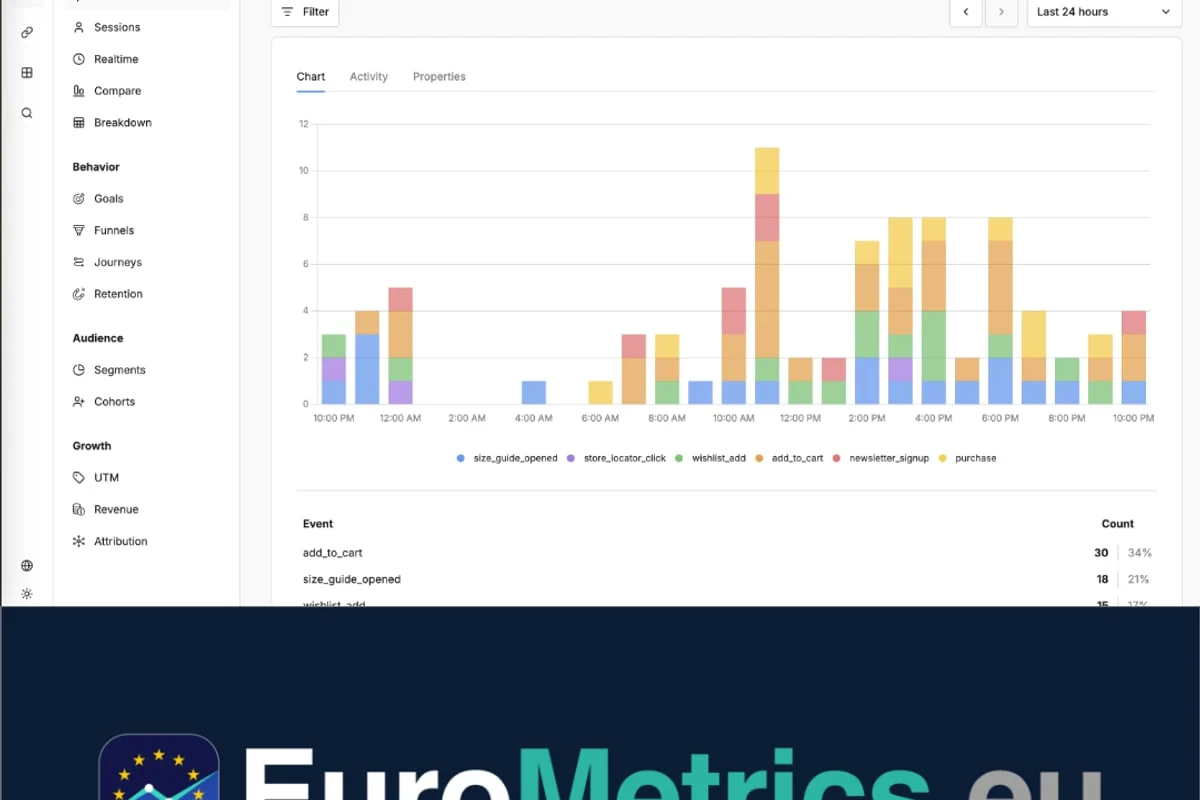
For businesses seeking to reduce dependency on external specialists whilst maintaining reliable analytics, platforms designed specifically for European requirements offer compelling advantages. Web Analytics for European Businesses represents this evolution, providing straightforward implementation without sacrificing analytical depth. Built with GDPR principles in mind and hosted exclusively in European data centres (Paris, Frankfurt, Amsterdam), solutions like EuroMetrics eliminate the complexity that necessitates agency intervention for many organisations.
Consider whether full-featured traditional platforms genuinely serve your needs or whether their complexity creates artificial dependency on specialist support. Many European SMBs discover that 80% of their analytical requirements are satisfied by simpler tools that cost less and demand minimal technical expertise.

Managing Multi-Client Analytics Operations
Agencies managing analytics for numerous clients face operational challenges distinct from single-account optimisation. Structure, automation, and standardisation become critical for profitable service delivery.
Account Architecture Best Practices
Proper account hierarchy prevents cross-contamination and simplifies management. Agency-specific structuring guidance recommends creating separate organisational accounts for each client rather than consolidating everything under the agency’s master account. This approach facilitates eventual migration when clients move in-house or change agencies.
Within each client account, maintain consistent naming conventions across properties, views, goals, and custom dimensions. Standardisation reduces cognitive load when switching between accounts and accelerates troubleshooting. Document these conventions in a shared style guide that all team members follow.
Implement template configurations for recurring implementation patterns. E-commerce tracking, lead generation forms, video engagement, and document downloads follow predictable structures that can be replicated with minor customisation. Templates reduce implementation time and minimise configuration errors.
Automation and Efficiency Tools
Manual report generation across multiple clients consumes excessive time and introduces inconsistency. Invest in automated reporting infrastructure that extracts data, applies calculations, generates visualisations, and distributes insights on predetermined schedules.
Quality assurance protocols become essential at scale. Regular audits checking for tracking gaps, data anomalies, filter misconfigurations, and goal completions prevent small errors from compounding into significant data integrity issues. Quarterly reviews typically suffice for stable implementations, whilst monthly checks suit rapidly evolving client environments.
Build client self-service portals where stakeholders access real-time dashboards without requesting custom reports. This reduces routine query volume and empowers clients to explore data independently. Balance accessibility with guidance to prevent misinterpretation of complex metrics.
Measuring Analytics Agency Performance
How do you evaluate whether your analytics partner delivers sufficient value to justify ongoing investment? Tangible outcomes matter more than activity metrics.
Value-Based Success Criteria
The ultimate measure of agency effectiveness is business impact from analytics-driven decisions. Track instances where data insights directly influenced strategy changes, budget allocations, or operational improvements. Document the financial outcomes of these decisions to calculate return on analytics investment.
Time to insight provides a secondary performance indicator. Measure the duration between asking business questions and receiving actionable answers. Effective agencies reduce this cycle through proactive monitoring, automated alerting, and pre-emptive analysis of emerging patterns.
Assess data quality improvements over the engagement duration. Tracking accuracy, data completeness, and measurement confidence should increase as agencies refine implementation and resolve technical issues. Persistent data quality problems indicate insufficient technical capability or inadequate attention.
Success Metric | Measurement Approach | Target Benchmark |
|---|---|---|
Business impact | Revenue/cost changes from decisions | Positive ROI within 6 months |
Insight delivery speed | Question to answer time | Under 48 hours for routine queries |
Data quality | Tracking accuracy audits | Above 95% accuracy |
Stakeholder satisfaction | Quarterly feedback surveys | Above 8/10 rating |
Monitor skill transfer if internal capability building forms part of the engagement scope. Team members should demonstrate increasing analytics proficiency over time, eventually requiring less support for routine tasks whilst engaging agencies for strategic rather than operational activities.
Privacy-Conscious Analytics Implementation
European businesses face heightened scrutiny around data collection practices. Analytics agencies must navigate regulatory complexity whilst maintaining measurement effectiveness.
Compliance Framework Development
Sound analytics programmes begin with data processing documentation that maps exactly what information is collected, where it is stored, how long it is retained, and who can access it. This foundation enables informed consent collection and supports compliance with data subject requests.
Implement consent management that respects user preferences without degrading analytical capability. Properly configured systems track opted-out users through cookieless methods whilst maintaining more detailed tracking for those who consent. This balanced approach provides insights whilst respecting individual choice.
Consider data minimisation principles during implementation planning. Collect only information directly supporting defined business objectives rather than tracking everything “just in case” it proves useful later. This discipline reduces privacy risk and simplifies compliance obligations.
Regular privacy impact assessments identify potential issues before they escalate. As tracking configurations evolve, reassess whether new implementations introduce processing activities requiring updated consent or additional safeguards. Cookie scanning tools help identify unexpected tracking elements that implementation changes might introduce.
Future-Proofing Your Analytics Strategy
Analytics continues to change quickly. Privacy regulations tighten, tracking technologies change, and user expectations shift. Sustainable strategies anticipate these trends rather than reacting to them.
Emerging Considerations
Server-side tracking is gaining traction as browser restrictions on client-side technologies intensify. This architectural shift moves data collection from user devices to server infrastructure, improving reliability whilst introducing new technical requirements. Agencies should demonstrate familiarity with these implementations.
Predictive analytics capabilities are moving from enterprise-only tools into mainstream platforms. Machine learning models that forecast customer behaviour, predict churn, and optimise conversion paths offer competitive advantages. Evaluate whether prospective agencies possess these capabilities if your business would benefit from predictive insights.
Privacy-first measurement approaches that eliminate third-party cookies and minimise personal data collection represent the industry’s future direction. Rather than viewing privacy as a constraint, forward-thinking organisations recognise simplified tracking as both a compliance benefit and a competitive differentiator.
Performance monitoring tools and uptime tracking complement analytics by providing technical context for traffic patterns. Sudden traffic drops coinciding with site performance degradation tell a clearer story than either dataset alone.
Building Internal Analytics Capabilities
Whilst agencies provide valuable expertise, sustainable analytics programmes require some internal capability. Complete dependency creates vulnerability and limits responsiveness.
Skills Development Priorities
Focus internal training on data interpretation rather than technical configuration. Team members who understand metrics, recognise patterns, and formulate hypotheses from data create more value than those who can build tracking implementations. Technical skills can be outsourced more easily than analytical thinking.
Develop stakeholder communication abilities within your analytics function. The capacity to translate technical findings into business language determines whether insights drive action or gather dust in unread reports. Practice presenting data narratives that connect metrics to outcomes stakeholders care about.
Establish cross-functional analytics literacy beyond dedicated analysts. When marketing managers, product owners, and customer service leaders understand basic analytics concepts, they ask better questions and apply insights more effectively in their domains.
Regular knowledge sharing sessions where agency partners educate internal teams create compounding capability improvements. Quarterly workshops covering topics like segmentation strategies, attribution modelling, or dashboard interpretation accelerate learning whilst strengthening the agency relationship.
Choosing a Google Analytics agency represents a significant investment in your business’s data capabilities. The right partnership transforms website metrics from confusing numbers into strategic advantages that drive measurable growth. However, European businesses should carefully evaluate whether platform complexity genuinely serves their needs or whether simpler, privacy-focused alternatives eliminate the requirement for extensive specialist support. EuroMetrics offers European organisations a streamlined analytics solution that combines detailed tracking with cookieless technology, eliminating consent banner friction whilst maintaining full analytical capability through 100% EU-hosted infrastructure.
Frequently Asked Questions
How much does a Google Analytics agency typically cost?
Agency pricing varies significantly based on scope and complexity. Monthly retainers for ongoing analytics management typically range from €1,500 to €10,000 for SMBs, whilst enterprise implementations can exceed €25,000 monthly. One-time implementation projects generally start around €3,000 for basic setups and reach €50,000+ for complex multi-platform configurations. Value-based pricing tied to business outcomes is emerging as an alternative to time-based billing.
Can I manage analytics in-house instead of hiring an agency?
In-house management is feasible for businesses with dedicated resources and appropriate technical expertise. Simple implementations with basic tracking requirements rarely justify agency costs. However, complex scenarios involving multi-domain tracking, e-commerce attribution, or custom event configurations benefit significantly from specialist expertise. Consider hybrid approaches where agencies handle implementation whilst internal teams manage ongoing reporting and analysis.
How long does analytics agency implementation take?
Timeline depends on complexity and organisational readiness. Basic implementations with standard tracking complete within 2-4 weeks. E-commerce configurations with product catalogues and transaction tracking typically require 4-8 weeks. Enterprise implementations spanning multiple properties, custom integrations, and historical data migration can extend 12-16 weeks. Delays often stem from internal approval processes rather than technical challenges.
What certifications should analytics agencies possess?
Platform-specific certifications demonstrate baseline technical competence. Look for current credentials rather than outdated qualifications on legacy platforms. However, certifications represent minimum standards rather than expertise indicators. Prioritise practical experience evidenced through case studies and client references over certification portfolios. Industry-specific knowledge often matters more than generic platform certification.
How do analytics agencies handle data privacy for European clients?
Reputable agencies implement strict data handling protocols including EU-only data storage, documented processing agreements, and regular compliance audits. They should provide clear documentation about where client data resides, who can access it, and how long it is retained. Agencies using traditional platforms with US-based infrastructure should transparently communicate the implications for data sovereignty and help clients implement appropriate safeguards.
When should I consider switching analytics agencies?
Consider changing partners when communication deteriorates, deliverable quality declines, or business impact from insights diminishes. Other warning signs include resistance to questions, missed deadlines, unexplained data discrepancies, or inability to adapt to changing business requirements. Schedule annual relationship reviews to assess whether the partnership continues delivering value proportional to investment. However, switching agencies disrupts momentum, so exhaust improvement conversations before initiating transitions.