
Digital measurement has changed dramatically since the early days of simple hit counters and page view metrics. Web analytics 2.0 represents a fundamental shift in how businesses understand and use their online data, moving beyond basic traffic statistics to embrace actionable insights, user engagement, and business outcomes. This evolution has become particularly relevant for European businesses navigating privacy regulations whilst seeking meaningful data to drive growth.
Understanding the Web Analytics 2.0 Framework
Web analytics 2.0 fundamentally reimagines how organisations approach digital measurement. Rather than focusing solely on quantitative metrics like visits and page views, this methodology emphasises actionable insights that directly influence business decisions.
The concept, popularised by Avinash Kaushik’s influential book, introduced a framework that balances three critical components: clickstream data, multiple outcomes analysis, and experimentation. This trinity forms the foundation of modern web analytics practice.
The Three Pillars of Modern Analytics
Traditional analytics platforms focused exclusively on what happened on your website. Web analytics 2.0 asks why it happened and what you should do about it.
Clickstream analysis tracks user journeys through your digital properties, revealing patterns in navigation, engagement, and conversion paths. Rather than simple page counts, this approach maps the actual experience visitors have with your content.
Multiple outcomes analysis recognises that not every visitor follows the same path to value. Some convert immediately, others engage with content, whilst many contribute indirectly through social sharing or brand awareness.
Experimentation and testing complete the framework by enabling continuous improvement based on actual user behaviour rather than assumptions.

Traditional Analytics | Web Analytics 2.0 |
|---|---|
Page views | User engagement depth |
Visit counts | Outcome achievement |
Time on site | Task completion rates |
Bounce rate | Micro-conversion tracking |
Traffic sources | Multi-touch attribution |
Privacy-First Implementation in 2026
The European digital ecosystem has pushed web analytics 2.0 beyond its original framework to incorporate privacy by design. Modern implementations must balance detailed insights with user rights and regulatory requirements.
Cookieless tracking technologies have matured significantly, enabling sophisticated measurement without traditional browser cookies. These approaches use server-side logic, session-based identifiers, and aggregated data patterns to maintain analytical depth whilst respecting user privacy.
For European businesses, this shift aligns perfectly with the web analytics 2.0 philosophy. The focus moves from individual user tracking to understanding aggregate behaviour patterns and outcomes. Privacy-conscious analytics tools demonstrate how thorough measurement works without requiring cookie consent banners or complex legal frameworks.
Key Privacy Considerations
- Server-side processing keeps user data within controlled environments
- Data residency ensures information never crosses regulatory boundaries
- Minimal data collection focuses on what truly drives decisions
- Transparent methodologies build trust with your audience
- No third-party processors eliminates external data sharing risks
The shift towards cookieless measurement hasn’t diminished analytical capabilities. Instead, it has forced the industry to adopt more sophisticated approaches that align with web analytics 2.0 principles: focus on outcomes rather than vanity metrics.
Actionable Metrics That Drive Decisions
Web analytics 2.0 distinguishes between data and insights. Data tells you what happened; insights tell you what to do about it.
Engagement Quality Over Quantity
Modern analytics prioritises engagement depth over surface-level metrics. A visitor who spends three minutes reading your pricing page and downloads a product guide demonstrates far more intent than ten visitors who bounce after five seconds.
Measuring scroll depth reveals which content truly engages readers. Tracking interaction events shows where users click, what they explore, and which calls-to-action resonate. Monitoring return visitor patterns indicates content value and brand affinity.
These engagement signals combine to paint a complete picture of user intent and interest, enabling you to optimise experiences based on demonstrated behaviour rather than assumed preferences.
Business Outcome Mapping
Every metric should connect to a business objective. Web analytics 2.0 demands this connection explicitly.
- Define clear objectives for each digital property or campaign
- Identify micro-conversions that signal progress towards goals
- Establish success metrics with specific, measurable targets
- Create custom segments reflecting different user journeys
- Build dashboards that surface actionable insights daily
This structured approach transforms raw data into strategic intelligence. Marketing managers can quickly identify which campaigns generate qualified leads, which content drives product consideration, and which channels deliver genuine business value.
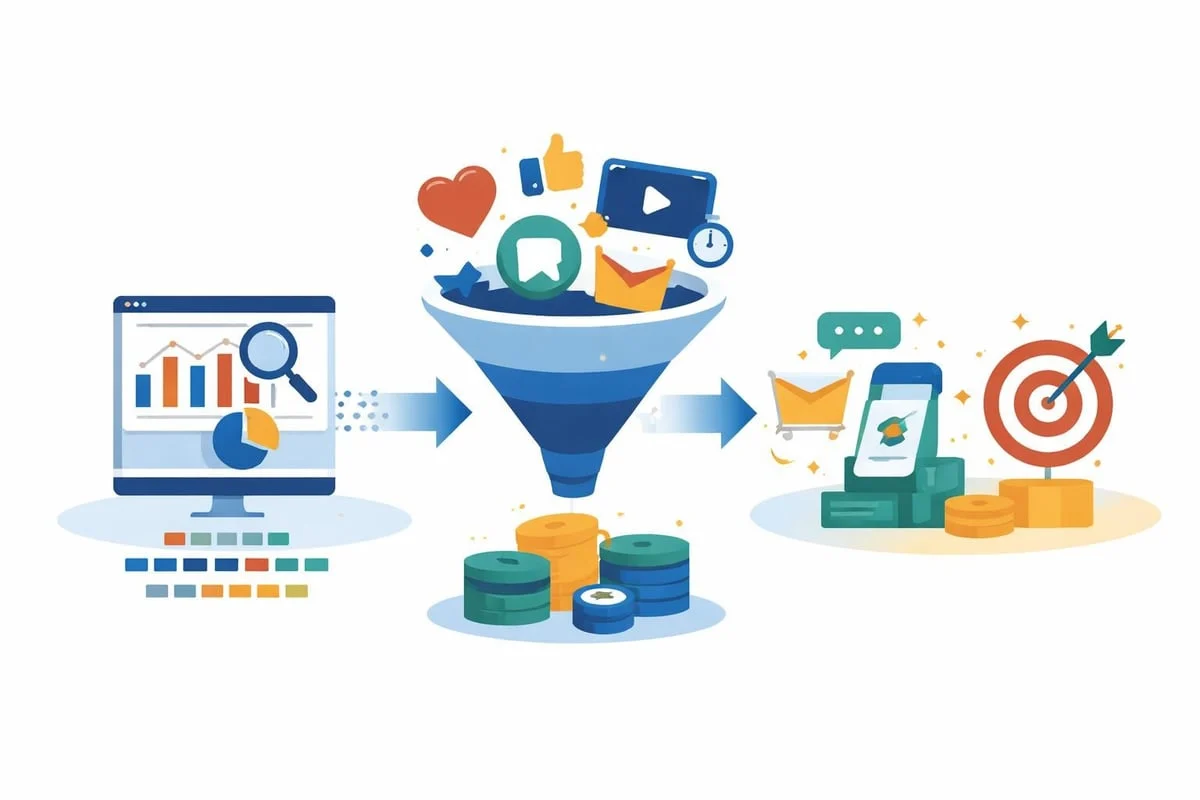
Advanced Segmentation Strategies
Segmentation separates web analytics 2.0 from basic traffic counting. Understanding aggregate patterns helps; understanding specific audience behaviours drives growth.
Segment Type | Use Case | Example Metric |
|---|---|---|
Behavioural | Content engagement | Pages per session for blog readers |
Acquisition | Channel effectiveness | Conversion rate by traffic source |
Geographic | Regional performance | Revenue by country |
Technology | Device optimisation | Mobile vs desktop engagement |
Temporal | Time-based patterns | Weekday vs weekend behaviour |
Creating Meaningful Segments
Start with your business questions. If you need to understand why mobile conversions lag desktop, create device-based segments that track the complete user journey. If regional campaigns deliver varying results, segment by geography and analyse behaviour differences.
Cohort analysis reveals how user behaviour evolves over time. Track how visitors acquired in January engage differently in subsequent months compared to those acquired in March. These patterns inform retention strategies and content development.
Custom event tracking enables precise measurement of specific user actions. Beyond standard page views, track video plays, PDF downloads, form interactions, or any behaviour that signals intent and engagement.
Modern platforms make segmentation accessible without requiring technical expertise. Visual interfaces enable marketers to build complex segments through intuitive filters and logic, democratising advanced analytics capabilities.
Integration and Multi-Channel Attribution
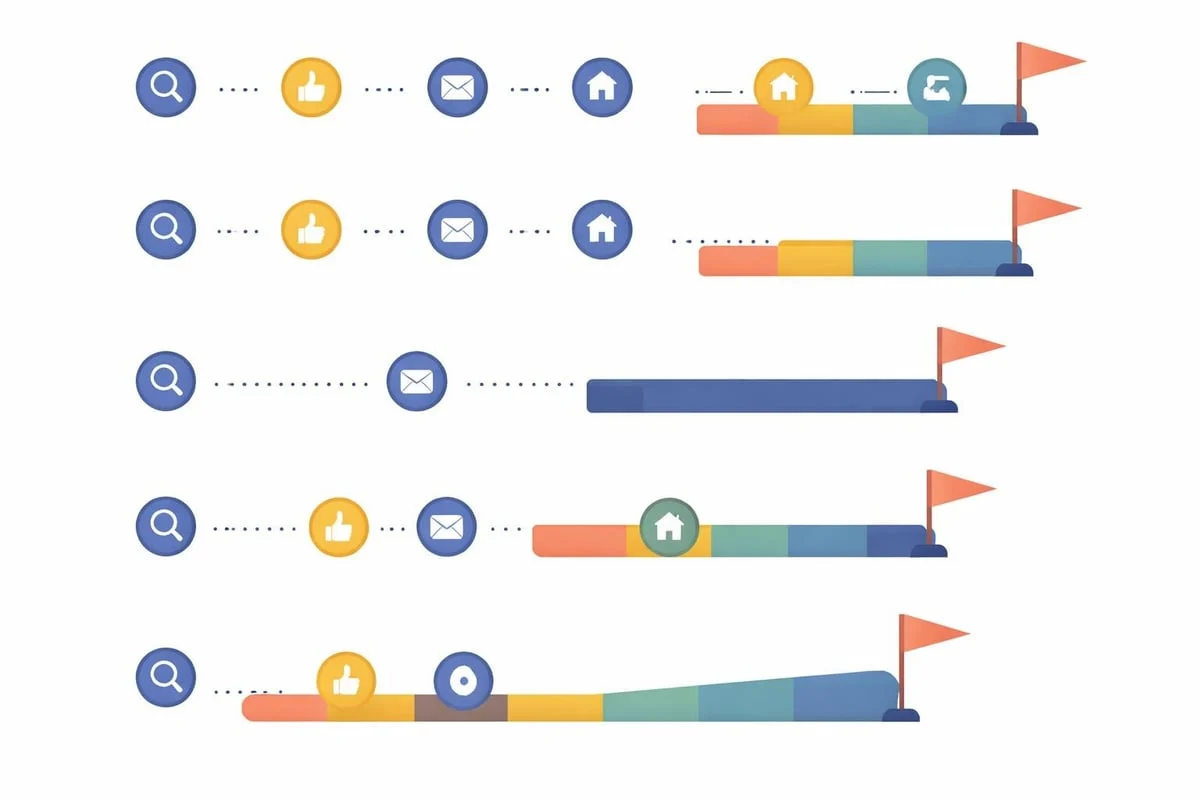
Web analytics 2.0 recognises that user journeys rarely follow linear paths. Visitors discover your brand through search, research on social media, compare options via email campaigns, and convert through direct navigation. Understanding these complex paths requires integrated measurement.
Breaking Down Data Silos
Connecting analytics data with other business systems reveals the complete customer journey. Integration with customer relationship management platforms shows how website behaviour correlates with sales outcomes. Email platform connections demonstrate how campaigns influence site engagement.
For European businesses, maintaining data sovereignty whilst integrating multiple systems presents unique challenges. Choosing analytics solutions that process data exclusively within EU borders ensures that even integrated workflows respect regulatory requirements.
The documentation resources for modern analytics platforms often include integration guides that help technical teams connect systems whilst maintaining privacy standards.
Attribution Modelling Approaches
- First-touch attribution credits the initial discovery channel
- Last-touch attribution assigns value to the final conversion source
- Linear attribution distributes credit equally across touchpoints
- Time-decay attribution weights recent interactions more heavily
- Position-based attribution emphasises first and last interactions
No single model suits every business. Web analytics 2.0 encourages testing multiple approaches to understand how different channels contribute to outcomes. This experimentation reveals which touchpoints deserve more investment and which play supporting roles in conversion paths.
Real-Time Analytics and Continuous Optimisation
The web analytics 2.0 framework emphasises agility and responsiveness. Real-time dashboards enable immediate reaction to emerging patterns, campaign performance, and user behaviour shifts.
Monitoring What Matters
Real-time capabilities become powerful when focused on actionable metrics. Track campaign landing page performance during product launches. Monitor content engagement during major announcements. Observe conversion rates during promotional periods.
This immediate feedback enables rapid optimisation. If a campaign underperforms in its first hours, adjust messaging, targeting, or creative elements before spending your full budget. If content resonates unexpectedly well, amplify distribution to maximise impact.
European businesses benefit particularly from real-time capabilities during regional campaigns. Time zone differences, cultural events, and local market dynamics require responsive measurement that adapts to each market’s unique patterns.
Building Experimentation Culture
Continuous testing separates web analytics 2.0 from passive observation. Every hypothesis deserves validation through structured experiments.
- Identify optimisation opportunities from your analytics data
- Formulate specific hypotheses about potential improvements
- Design controlled tests that isolate variables
- Run experiments with statistical rigour
- Implement winning variations and continue testing
This cycle transforms analytics from a reporting function into a growth engine. Marketing teams develop hypotheses based on user behaviour patterns, test variations methodically, and implement improvements continuously.
Practical Implementation for European SMBs
Small and medium-sized European businesses face unique analytics challenges. Limited technical resources, budget constraints, and regulatory complexity make traditional enterprise analytics platforms impractical.
Web analytics 2.0 principles actually favour simpler implementations. Focus on outcomes rather than collecting everything. Prioritise actionable insights over vanity metrics. Build measurement frameworks that inform specific decisions.
Selecting the Right Platform
European SMBs need analytics solutions that balance capability with simplicity. Complex tools require dedicated analysts to extract value. Legacy analytics platforms demand extensive configuration, consent management, and ongoing maintenance.
Modern alternatives designed specifically for European businesses address these challenges directly. EuroMetrics provides full tracking without cookies, eliminating consent banner complexity whilst maintaining analytical depth. 100% EU-hosted infrastructure ensures data never crosses regulatory boundaries, simplifying compliance considerations.
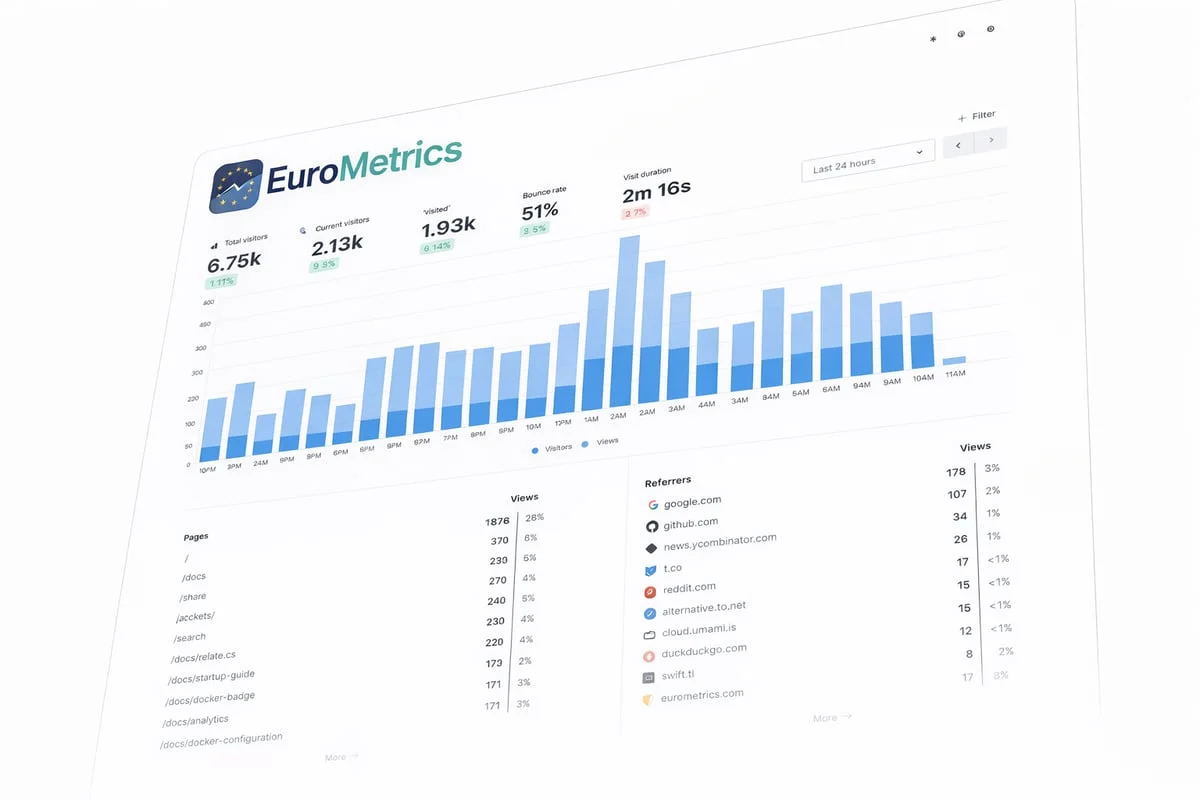
The platform’s real-time dashboard surfaces actionable insights without requiring technical expertise, making web analytics 2.0 principles accessible to marketing managers and business owners rather than limiting them to data specialists.
Essential Metrics for Growing Businesses
Starting with a focused metric set prevents analysis paralysis whilst ensuring you capture what matters:
- Traffic sources and quality reveal which channels drive engaged visitors
- Engagement indicators show which content resonates with your audience
- Conversion paths map the journeys that lead to business outcomes
- Page performance identifies optimisation opportunities
- Return visitor behaviour demonstrates content value and brand strength
Expand your measurement framework as your business grows and questions become more sophisticated. This staged approach prevents overwhelming teams whilst building analytical capabilities progressively.
Technical Considerations and Data Quality
Web analytics 2.0 implementation requires attention to data accuracy and technical reliability. Insights are only valuable when based on trustworthy data.
Ensuring Measurement Accuracy
Script placement affects data capture completeness. Analytics code should load early in page rendering without blocking critical content. Modern cookieless solutions use lightweight tracking that minimises performance impact.
Bot filtering prevents automated traffic from skewing metrics. Quality analytics platforms distinguish genuine user behaviour from crawlers, scrapers, and automated testing tools.
Cross-domain tracking maintains user journey integrity across multiple properties. If your business operates separate domains for different regions or functions, proper configuration ensures complete journey visibility.
European businesses should verify that their analytics implementation actually respects the privacy principles it claims. Use cookie scanning tools to confirm that your chosen platform truly operates without third-party cookies or hidden trackers.
Performance and Analytics Integration
Analytics tracking shouldn’t degrade user experience. Page load speed influences both user satisfaction and search engine rankings.
Check your site’s performance regularly with tools that test page speed from European servers to understand how measurement impacts load times. Cookieless analytics solutions typically demonstrate faster performance than traditional cookie-based platforms due to reduced client-side processing.
Performance Factor | Legacy Analytics | Modern Cookieless |
|---|---|---|
Initial script size | 45-60 KB | 2-3 KB |
Cookie operations | Multiple reads/writes | None |
Third-party requests | Often required | Eliminated |
Client-side processing | Extensive | Minimal |
GDPR consent delay | Banner interaction required | No delay |
Training Teams and Building Analytics Literacy
Technology alone doesn’t deliver web analytics 2.0 benefits. Teams need skills to interpret data, formulate hypotheses, and implement improvements based on insights.
Developing Internal Capabilities
Start with foundational concepts before advancing to sophisticated analysis. Ensure team members understand:
- How tracking works and what data represents
- The difference between metrics and actionable insights
- Basic statistical concepts affecting interpretation
- Common analysis pitfalls and how to avoid them
- Your specific business objectives and how metrics connect
Regular training sessions keep skills current as platforms evolve and business needs change. Encourage experimentation with analytics data, hypothesis formation, and structured testing.
Creating Data-Driven Culture
Web analytics 2.0 succeeds when insights influence decisions across the organisation, not just within marketing teams.
Share relevant data with stakeholders who can act on it. Product teams benefit from feature usage patterns. Content creators need engagement metrics. Sales teams value lead quality indicators.
Celebrate insight-driven wins to reinforce analytical thinking. When testing reveals conversion improvements or content resonates unexpectedly well, share these successes broadly.
Question assumptions systematically. The most valuable insights often contradict conventional wisdom. Creating safe spaces to challenge beliefs with data drives innovation.
The learning resources provided by modern analytics platforms help teams build these capabilities without external training costs.
Future Directions and Emerging Capabilities
Web analytics continues evolving beyond the 2.0 framework. Several trends shape how European businesses will measure digital performance in coming years.
Privacy-Enhancing Technologies
Differential privacy, federated learning, and other advanced techniques enable aggregate insights without individual-level tracking. These approaches align perfectly with European privacy values whilst maintaining analytical depth.
Expect analytics platforms to adopt these technologies more broadly, further reducing privacy risks whilst preserving measurement capabilities.
Predictive Analytics Integration
Machine learning models increasingly identify patterns humans might miss, predict future behaviour, and recommend optimisation strategies. These capabilities become accessible to smaller businesses as platforms embed intelligence into standard features.
Predictive capabilities help answer forward-looking questions: which visitors show purchase intent, which content types will resonate with specific segments, which campaigns will likely deliver strong returns.
Cross-Device and Identity Resolution
Understanding user journeys across devices remains challenging in cookieless environments. Privacy-preserving identity resolution techniques enable aggregate cross-device insights without individual tracking.
These developments will help businesses understand multi-device behaviour patterns whilst respecting user privacy and regulatory requirements.
Frequently Asked Questions
What exactly is web analytics 2.0 and how does it differ from traditional analytics?
Web analytics 2.0 represents a methodological shift from simple traffic counting to actionable insight generation. Unlike traditional analytics that focus on page views and visits, web analytics 2.0 emphasises user engagement, business outcome measurement, and continuous experimentation. The framework balances three components: clickstream analysis, multiple outcomes tracking, and systematic testing, enabling businesses to understand not just what happened but why it happened and what to do about it.
Can European businesses implement web analytics 2.0 without cookies?
Absolutely. Modern cookieless tracking technologies fully support web analytics 2.0 principles. Server-side processing, session-based identifiers, and aggregated behaviour analysis provide thorough measurement without traditional browser cookies. This approach actually aligns better with web analytics 2.0 philosophy by focusing on aggregate patterns and outcomes rather than individual user surveillance. European businesses benefit from eliminating cookie consent banners whilst maintaining analytical depth.
What metrics should SMBs prioritise in a web analytics 2.0 implementation?
Start with metrics directly connected to business objectives. Traffic source quality reveals which channels drive engaged visitors. Engagement indicators like scroll depth and interaction events show content resonance. Conversion path analysis maps successful journeys. Page performance metrics identify optimisation opportunities. Return visitor behaviour demonstrates content value. Expand measurement as questions become more sophisticated, but always prioritise actionable insights over exhaustive data collection.
How does web analytics 2.0 handle multi-channel attribution?
Web analytics 2.0 recognises that customer journeys involve multiple touchpoints across channels. Attribution modelling distributes conversion credit across these interactions using various approaches: first-touch, last-touch, linear, time-decay, or position-based models. The framework encourages testing multiple attribution models to understand how different channels contribute to outcomes, enabling more informed investment decisions across marketing channels.
What technical skills do teams need to use web analytics 2.0 effectively?
Web analytics 2.0 prioritises insight over technical complexity. Teams need foundational understanding of how tracking works, the difference between metrics and insights, basic statistical concepts, and how measurements connect to business objectives. Modern platforms with intuitive interfaces make advanced capabilities accessible without requiring dedicated analysts. Focus on developing hypothesis formation, structured testing, and data interpretation skills rather than technical implementation knowledge.
How do European data sovereignty requirements affect web analytics 2.0 implementation?
European businesses must ensure analytics data remains within regulatory boundaries and processes through transparent methodologies. This means selecting platforms that host infrastructure exclusively in EU data centres, avoid US-based subprocessors, and process data server-side within controlled environments. These requirements actually simplify web analytics 2.0 implementation by eliminating cookie consent complexity and focusing measurement on aggregate behaviour patterns rather than individual surveillance.
Web analytics 2.0 transforms how European businesses understand and optimise their digital presence by emphasising actionable insights over vanity metrics. By implementing privacy-first measurement that focuses on engagement, outcomes, and continuous experimentation, organisations build sustainable competitive advantages whilst respecting user rights. EuroMetrics brings these principles to life with 100% EU-hosted, cookieless analytics that delivers detailed insights through an intuitive real-time dashboard, making sophisticated measurement accessible to European SMBs without the complexity of legacy analytics platforms.