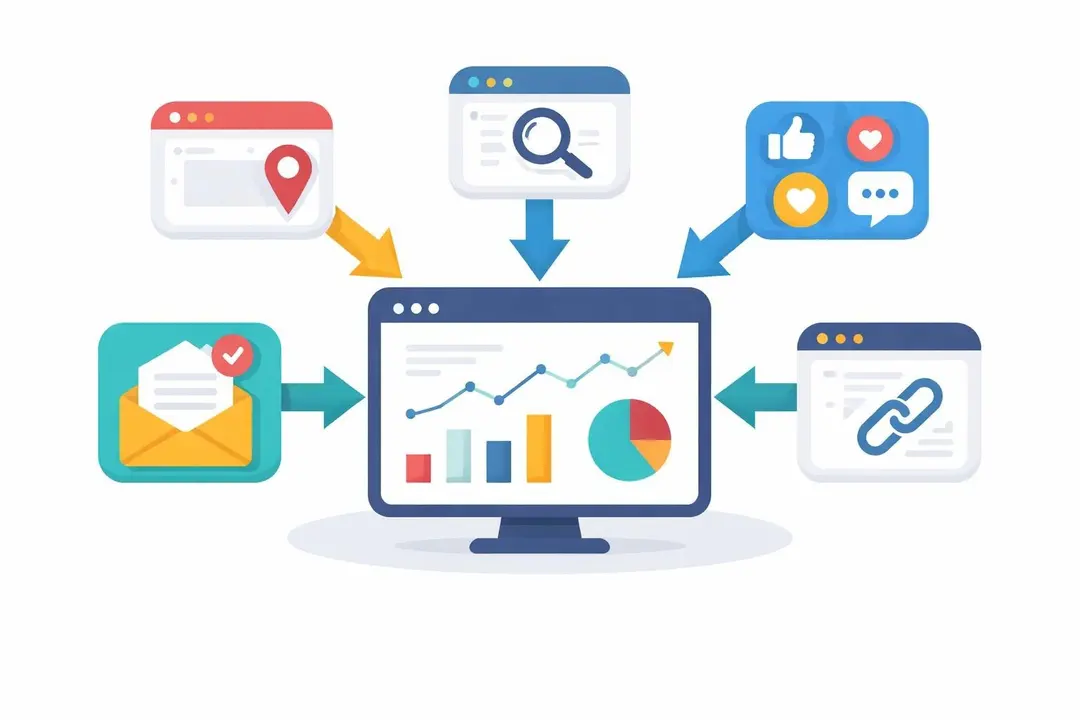
Understanding where your website visitors originate remains fundamental to digital success in 2026. Every web traffic source tells a story about your audience’s behaviour, preferences, and how they discover your content. For European businesses operating in an increasingly privacy-conscious market, tracking these sources whilst respecting user rights presents both challenges and opportunities that traditional analytics tools often fail to address properly.
Understanding Web Traffic Source Categories
A web traffic source represents the origin point from which a visitor arrives at your website. These sources fall into distinct categories, each revealing different aspects of your digital marketing effectiveness and audience behaviour patterns.
Direct traffic occurs when visitors type your URL directly into their browser or access your site through saved bookmarks. This source typically indicates strong brand recognition and loyal audiences who actively seek your content without intermediary channels.
Organic search traffic arrives through search engine results pages (SERPs) when users query relevant terms. This remains one of the most valuable sources because it demonstrates intent-based discovery where users actively search for solutions you provide.
Referral traffic comes from external websites linking to your content. These visitors click hyperlinks on other domains, blogs, news sites, or directories that reference your pages. According to research on Wikipedia’s role as a traffic gateway, high-authority platforms can generate substantial referral volumes through strategic external linking.

Paid Advertising Sources
Paid channels encompass any traffic generated through monetary investment in advertising platforms. This includes:
- Search engine marketing (SEM) through platforms like Google Ads or Bing Ads
- Display advertising networks showing banner or video advertisements
- Social media advertising on platforms like LinkedIn, Facebook, or Instagram
- Native advertising embedded within content platforms
- Retargeting campaigns that follow previous site visitors across the web
Each paid source provides immediate visibility but requires ongoing investment and careful tracking to ensure positive return on investment (ROI).
Social Media Traffic Patterns
Social platforms generate traffic through both organic posts and paid promotions. European businesses notice distinct patterns across different networks, with LinkedIn often outperforming other platforms for B2B audiences whilst Instagram and TikTok drive younger consumer segments.
Studies on web traffic patterns demonstrate that social media’s role as a web traffic source has evolved significantly, with platform algorithms increasingly favouring video content and authentic engagement over promotional material.
Tracking Web Traffic Sources Accurately
Modern privacy regulations across Europe have fundamentally transformed how businesses can track their web traffic source data. Cookie-based tracking faces increasing restrictions, making alternative approaches essential for accurate attribution.
UTM parameters remain the gold standard for campaign tracking. These URL tags allow you to specify the source, medium, and campaign name directly within links shared across different channels. When properly implemented, UTM tracking provides granular insights without requiring invasive tracking technologies.
UTM Parameter | Purpose | Example Value |
|---|---|---|
utm_source | Identifies the platform | newsletter, linkedin, twitter |
utm_medium | Defines the marketing medium | email, social, cpc |
utm_campaign | Names the specific campaign | spring_sale_2026, product_launch |
utm_content | Differentiates similar content | banner_a, text_link |
utm_term | Captures paid search keywords | analytics_software, web_tracking |
Building your campaign URLs systematically ensures consistent tracking across all marketing initiatives. Many businesses benefit from using a campaign URL builder to maintain standardised parameter formats across their teams.
Server-Side Tracking Advantages
Server-side tracking processes visitor data on your web server rather than in the browser. This approach offers several advantages for European businesses:
Privacy preservation: Server-side methods reduce reliance on third-party cookies and browser-based tracking that users increasingly block or disable.
Data accuracy: Ad blockers and browser privacy features cannot prevent server logs from recording visitor information, providing more complete traffic source data.
Regulatory alignment: Processing data server-side gives you greater control over information storage locations and data handling procedures.
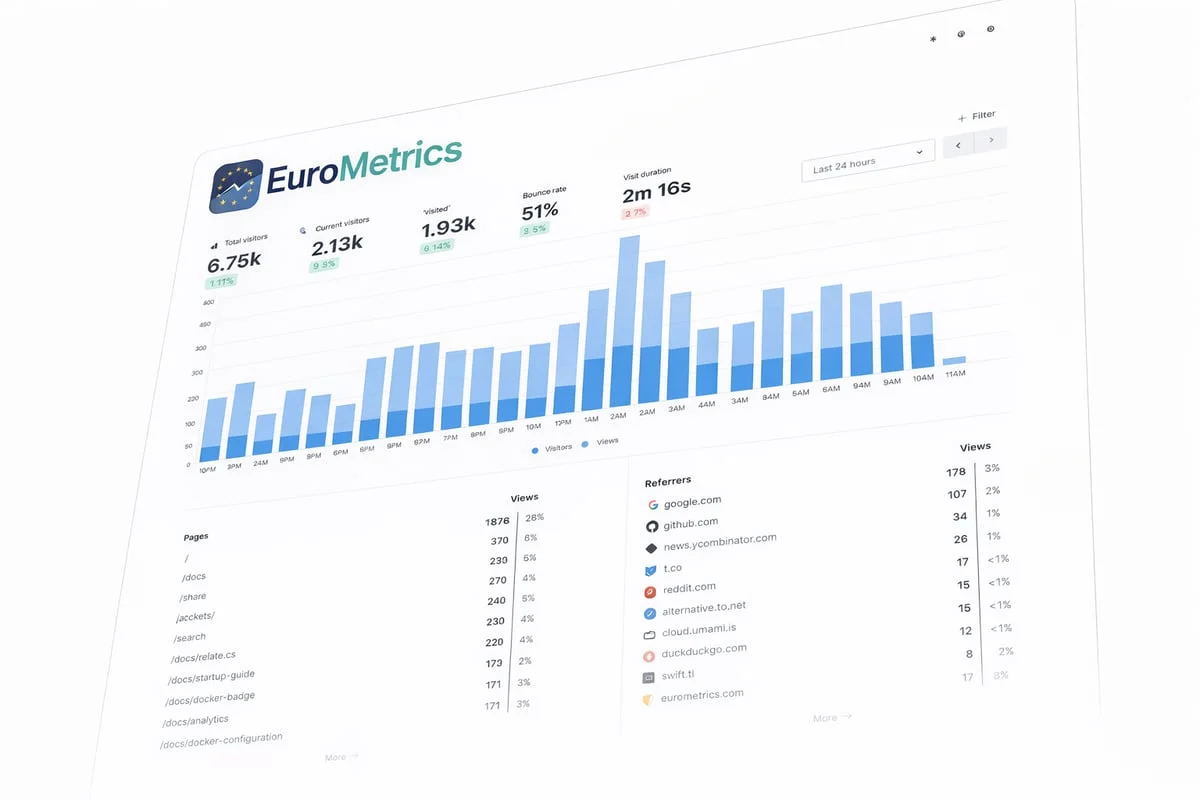
For businesses operating under European data protection frameworks, implementing cookieless tracking through server-side methods helps maintain compliance whilst preserving analytical capabilities. EuroMetrics offers exactly this approach through its Web Analytics for European Businesses, providing complete traffic source visibility without cookie consent banners or data transfers outside the EU.
Optimising Each Web Traffic Source
Different sources require distinct optimisation strategies to maximise their contribution to your overall traffic mix and business objectives.
Maximising Organic Search Traffic
Search engine optimisation (SEO) remains the most sustainable long-term strategy for quality traffic acquisition. Focus on these evidence-based approaches:
- Conduct thorough keyword research to identify terms your target audience actively searches
- Create in-depth content that addresses user intent better than competing pages
- Build authoritative backlinks from relevant domains within your industry
- Optimise technical elements including page speed, mobile responsiveness, and structured data
- Monitor performance regularly using tools like SEO audit platforms to identify improvement opportunities
The concept of do-follow links plays a key role in building domain authority that subsequently improves your visibility across search results.
Referral Traffic Development
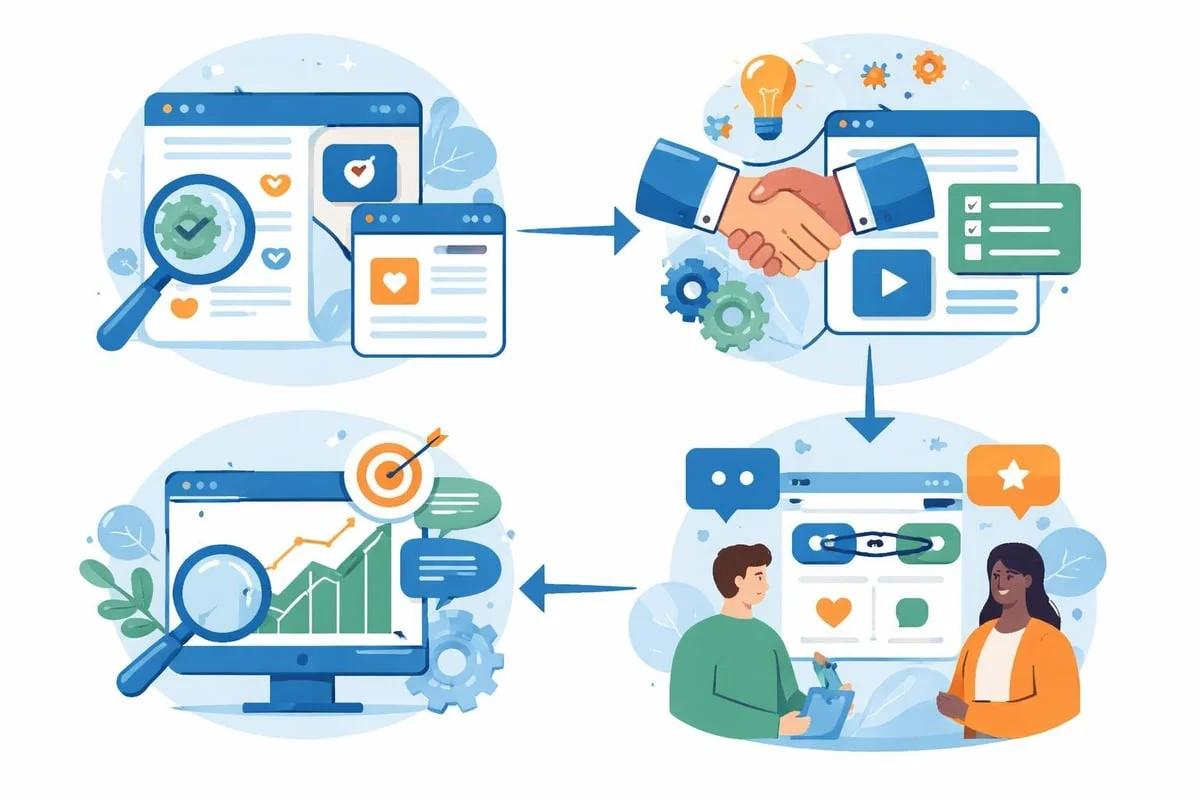
Cultivating strong referral sources requires relationship building and strategic content placement. Identify websites your target audience frequents and explore partnership opportunities.
Guest posting on industry publications provides dual benefits: exposing your expertise to new audiences whilst generating valuable referral traffic through author biographies and contextual links. Analysis of successful blogs reveals that consistent quality content combined with strategic placement drives substantial referral volumes.
Consider these referral source opportunities:
- Industry directories and listing sites relevant to your sector
- Partner websites where mutual promotion benefits both parties
- News sites and publications covering your industry topics
- Community forums and discussion platforms where your expertise adds value
- Resource pages curated by educational institutions or industry bodies
Emerging Web Traffic Sources in 2026
Digital marketing keeps changing, introducing new channels that forward-thinking European businesses should monitor and test.
AI-Powered Search Platforms
Artificial intelligence search engines and answer platforms represent a growing web traffic source that operates differently from traditional search. Platforms like ChatGPT, Perplexity, and Claude increasingly provide direct answers with citations rather than link lists.
Optimising for these channels requires understanding answer engine optimization principles. Your content must demonstrate clear expertise, provide concise answers, and include proper citation structures that AI systems can parse and reference.
To check whether these platforms actually name your brand, and how often they link to you, see our guide on how to measure brand visibility in AI answers.
Strategies for obtaining traffic from ChatGPT emphasise creating authoritative, well-structured content that AI models select as reliable sources. The Perplexity optimization playbook provides specific tactics for ensuring your content appears in AI-generated responses.
Voice Search and Smart Speakers
Voice-activated searches through smart speakers and mobile assistants continue growing across European households. These queries tend towards conversational, question-based formats requiring content optimisation around natural language patterns.
Voice search traffic typically manifests as organic search in analytics platforms, but the user journey differs significantly from traditional typed queries. Users expect immediate, concise answers rather than browsing multiple results.
Analysing Web Traffic Source Performance
Raw traffic numbers tell only part of the story. Effective analysis examines how each web traffic source contributes to your business objectives beyond simple visitor counts.
Metric | What It Reveals | Why It Matters |
|---|---|---|
Bounce Rate | Percentage leaving without interaction | Indicates traffic quality and relevance |
Average Session Duration | Time spent on site per visit | Shows engagement depth |
Pages per Session | Content pieces viewed per visit | Reflects visitor interest level |
Conversion Rate | Percentage completing desired actions | Measures business impact |
Revenue per Visitor | Average value generated per user | Quantifies source profitability |
Compare these metrics across different sources to identify which channels deliver your most valuable visitors. Often, the highest-volume source does not generate the most conversions or revenue.
Attribution Modelling Considerations
Attribution determines which web traffic source receives credit for conversions when visitors interact with multiple channels before converting. European businesses must balance attribution sophistication with privacy requirements.
First-click attribution credits the initial source that introduced the visitor. This model values traffic sources for awareness generation and new audience discovery.
Last-click attribution assigns conversion credit to the final source before purchase. This approach favours channels effective at closing sales but ignores earlier touchpoints.
Multi-touch attribution distributes credit across multiple sources in the customer journey. Whilst more accurate, this requires tracking individual users across sessions, raising privacy considerations that require careful implementation under European frameworks.
Privacy-Focused Traffic Source Analysis
European businesses face unique challenges balancing thorough traffic source tracking with privacy obligations. Traditional analytics platforms often employ tracking methods that conflict with privacy-first principles.
Cookie consent fatigue affects data collection accuracy when visitors decline tracking cookies. This creates incomplete datasets where significant traffic portions remain unattributed or misclassified as direct traffic.
Cross-domain tracking limitations mean visitor journeys spanning multiple properties become difficult to follow without third-party cookies, fragmenting attribution understanding.
Browser privacy features like Intelligent Tracking Prevention (ITP) and Enhanced Tracking Protection actively block many conventional tracking methods, further degrading data quality.
Adopting cookieless analytics addresses these challenges whilst maintaining GDPR principles. Solutions that process data server-side and store information exclusively within EU data centres provide complete traffic source visibility without compromising visitor privacy or requiring consent banners.
The EuroMetrics platform exemplifies this approach, offering real-time traffic source tracking through 100% EU-hosted infrastructure that never transfers data to US subprocessors.
Quality Versus Quantity in Traffic Sources
Not all visitors provide equal value. Prioritising traffic quality over raw numbers typically delivers superior business outcomes and more efficient marketing spend.
High-quality traffic characteristics include:
- Visitors matching your ideal customer profile
- Users demonstrating purchase intent or engagement signals
- Sessions resulting in conversions, sign-ups, or other valuable actions
- Traffic from sources with high return visit rates
- Visitors spending meaningful time consuming content
Low-quality traffic might inflate vanity metrics whilst providing minimal business value. Research examining low-quality content consumption demonstrates that certain sources consistently deliver visitors unlikely to engage meaningfully with legitimate business content.
Evaluate each web traffic source against business objectives rather than volume alone. A channel generating 100 highly qualified visitors often outperforms one delivering 10,000 casual browsers who immediately bounce.
Balancing Your Traffic Source Portfolio
Relying excessively on any single web traffic source creates vulnerability. Algorithm changes, platform policy shifts, or competitive dynamics can dramatically impact channels you depend upon.
Diversification across multiple sources provides stability and resilience. Develop a balanced portfolio that includes:
- Owned channels: Email lists, mobile apps, and communities you control directly
- Earned media: Organic search rankings, PR coverage, and referral partnerships
- Paid channels: Advertising campaigns you can scale based on performance
- Social presence: Platform-specific audiences cultivated through consistent engagement
- Direct traffic: Brand recognition driving unmediated visits
Monitor your traffic source distribution monthly. If any single source exceeds 60% of total traffic, consider that a warning signal to diversify. Sudden dependence indicates excessive risk should that channel face disruption.
Advanced Web Traffic Source Strategies
Sophisticated marketers employ nuanced tactics to maximise returns from each channel whilst maintaining privacy standards.
Dark Social Tracking
“Dark social” refers to sharing through private channels like messaging apps, email, and direct messages where traditional tracking fails. This represents a significant web traffic source often misattributed as direct traffic.
Implement URL shorteners with tracking capabilities for content specifically designed for sharing. Include social sharing buttons that append source parameters automatically. Create unique landing pages for different distribution channels to identify traffic origins through destination URLs.
Cross-Channel Synergies
Certain web traffic sources amplify others when strategically coordinated. Content appearing in search results gains additional visibility when shared across social channels. Paid advertising can jumpstart visibility for organic content whilst building brand recognition that increases direct traffic over time.
Email campaigns drive immediate traffic spikes that signal engagement to search algorithms, potentially boosting organic rankings. Referral partnerships introduce new audiences who subsequently search branded terms, increasing organic visibility.
FAQ
What is the most valuable web traffic source for European businesses?
Organic search typically provides the highest long-term value because it indicates intent-based discovery where visitors actively seek solutions you offer. However, the most valuable source varies by business model, with B2B companies often finding LinkedIn referrals highly qualified whilst e-commerce brands may prioritise paid search for immediate conversions. Evaluate sources based on conversion rates and customer lifetime value rather than traffic volume alone.
How can I track web traffic sources without cookies?
Server-side analytics solutions process visitor data on your web server rather than through browser cookies, providing complete traffic source visibility whilst respecting privacy. UTM parameters in campaign URLs allow source attribution without tracking technologies. Cookieless platforms designed with GDPR principles collect referrer information, landing pages, and session data without requiring consent banners or third-party cookies.
Why does so much traffic appear as direct in my analytics?
Direct traffic inflation often results from tracking limitations rather than genuine direct visits. Common causes include privacy features blocking referrer information, mobile app traffic without proper attribution, HTTPS-to-HTTP transitions dropping referrer data, email clients stripping tracking parameters, and dark social sharing through messaging apps. Implementing proper UTM tagging and cookieless tracking reduces misattribution significantly.
How do I determine authoritative web traffic sources?
Evaluate sources using multiple criteria including domain authority scores, editorial standards, audience relevance, traffic quality metrics, and conversion performance. Guidelines for determining source authoritativeness provide frameworks for assessment. Monitor bounce rates, session duration, and conversion rates from each referral source. High-authority sources typically deliver engaged visitors who interact meaningfully with your content.
Should European businesses use different traffic strategies than US companies?
European businesses must prioritise privacy-compliant tracking methods given GDPR and national data protection laws that US companies may overlook. This means favouring cookieless analytics, server-side processing, and EU-hosted data storage. Additionally, European audiences often exhibit different channel preferences, with regional social platforms and search engines playing larger roles in specific markets. Cultural nuances around privacy expectations also influence which traffic acquisition tactics prove most effective.
How often should I analyse web traffic source performance?
Review traffic source performance weekly for tactical adjustments to active campaigns, monthly for strategic decisions about channel investment, and quarterly for a full portfolio rebalancing. Daily monitoring makes sense during major campaigns or product launches. Establish automated alerts for significant traffic drops from key sources to identify and address issues promptly. Regular analysis through platforms like those available at EuroMetrics ensures you maintain visibility into changing patterns and emerging opportunities.
Understanding and optimising your web traffic source mix remains essential for sustainable digital growth in the privacy-focused market of 2026. By implementing cookieless tracking, diversifying acquisition channels, and prioritising quality over quantity, European businesses can build resilient traffic strategies that respect user privacy whilst delivering actionable insights. EuroMetrics provides the tools you need to track every traffic source with complete transparency, storing all data exclusively in European data centres without cookies or consent barriers, so you can make informed decisions about where to invest your marketing efforts.