
Choosing the right analytics platform changes how you understand your website visitors and make data-driven decisions. With increasing regulatory pressure and growing privacy concerns across Europe, conducting a thorough website analytics comparison matters more than it used to. European businesses now face a unique challenge: balancing detailed data insights with strict privacy requirements whilst ensuring data sovereignty remains within EU borders. This guide examines the essential factors to consider when comparing analytics platforms, from technical capabilities to compliance considerations, helping you select the solution that aligns with your business needs and regulatory obligations.
Understanding the Analytics Market in 2026
The web analytics market has evolved dramatically over the past few years, driven by privacy regulations, changing user expectations, and technological innovation. Traditional analytics platforms that dominated the market have faced significant challenges from privacy-focused alternatives.
Today’s website analytics comparison must account for factors that barely existed a decade ago. Data residency, cookieless tracking, and real-time processing have moved from nice-to-have features to essential requirements for European businesses.

Key Market Segments
The analytics market now divides into several distinct categories:
- Legacy enterprise platforms: Feature-rich but complex, often US-based with data transfer concerns
- Privacy-first alternatives: Built specifically for European regulations, cookieless by design
- Open-source solutions: Self-hosted options offering maximum control
- Hybrid platforms: Attempting to balance a full feature set with privacy compliance
According to research on web analytics tools, businesses increasingly prioritize simplicity and compliance over feature abundance. This shift reflects a broader market maturation where quality of insights matters more than quantity of metrics.
Critical Comparison Criteria
When conducting a website analytics comparison, certain factors deserve particular attention. These criteria help distinguish between superficially similar platforms and reveal which solutions truly meet European business requirements.
Data Sovereignty and Hosting Location
Where your data resides matters more than ever. EU regulations and recent court decisions have made data hosting location a primary consideration rather than a technical detail.
Hosting Type | Data Location | Transfer Risk | Performance |
|---|---|---|---|
US-based | United States | High | Variable |
EU-exclusive | European datacentres | Minimal | Optimized for EU |
Multi-region | Global distribution | Medium | High |
Self-hosted | Your infrastructure | None | Depends on setup |
Platforms that store data exclusively in European datacentres eliminate cross-border transfer concerns. This geographical specificity matters not just for compliance but also for performance, as data travels shorter distances between your servers and your visitors.
Privacy Architecture
The foundation of any analytics platform’s privacy approach determines its long-term viability. A meaningful website analytics comparison examines how each platform handles visitor identification, data collection, and consent management.
Cookieless tracking has emerged as the gold standard for European businesses. Unlike traditional analytics tools that rely on persistent cookies, modern platforms use privacy-preserving techniques such as:
- Hashed IP addresses with daily rotating salts
- Session-based identification without persistent storage
- Server-side processing that never exposes visitor identifiers
- Anonymous aggregation that prevents individual tracking
These technical approaches mean businesses can operate without cookie consent banners whilst still gathering valuable insights. As detailed in research on Plausible Analytics, privacy-focused platforms show that detailed analytics doesn’t require invasive tracking.
Feature Comparison Framework
Beyond privacy and hosting, functionality determines whether an analytics platform meets your practical needs. A thorough website analytics comparison evaluates features across several dimensions.
Core Tracking Capabilities
Every analytics platform tracks basic metrics, but implementation quality varies significantly:
- Page view tracking: Accuracy in single-page applications versus traditional websites
- Traffic source attribution: Identifying where visitors originate
- User behaviour flows: Understanding visitor journeys through your site
- Event tracking: Monitoring interactions like downloads, video plays, or form submissions
- Goal conversion monitoring: Measuring achievement of business objectives
Advanced platforms offer real-time dashboards that update as visitors interact with your site, whilst others batch-process data with delays ranging from minutes to hours. For time-sensitive campaigns, this difference matters a lot.
Technical Integration
Implementation complexity affects both initial setup and ongoing maintenance. Consider these integration factors:
- Script size and loading speed: Smaller scripts improve page performance
- Framework compatibility: Support for React, Vue, Next.js, and other modern frameworks
- API availability: Programmatic access for custom reporting
- Export capabilities: Extracting data for analysis in other tools
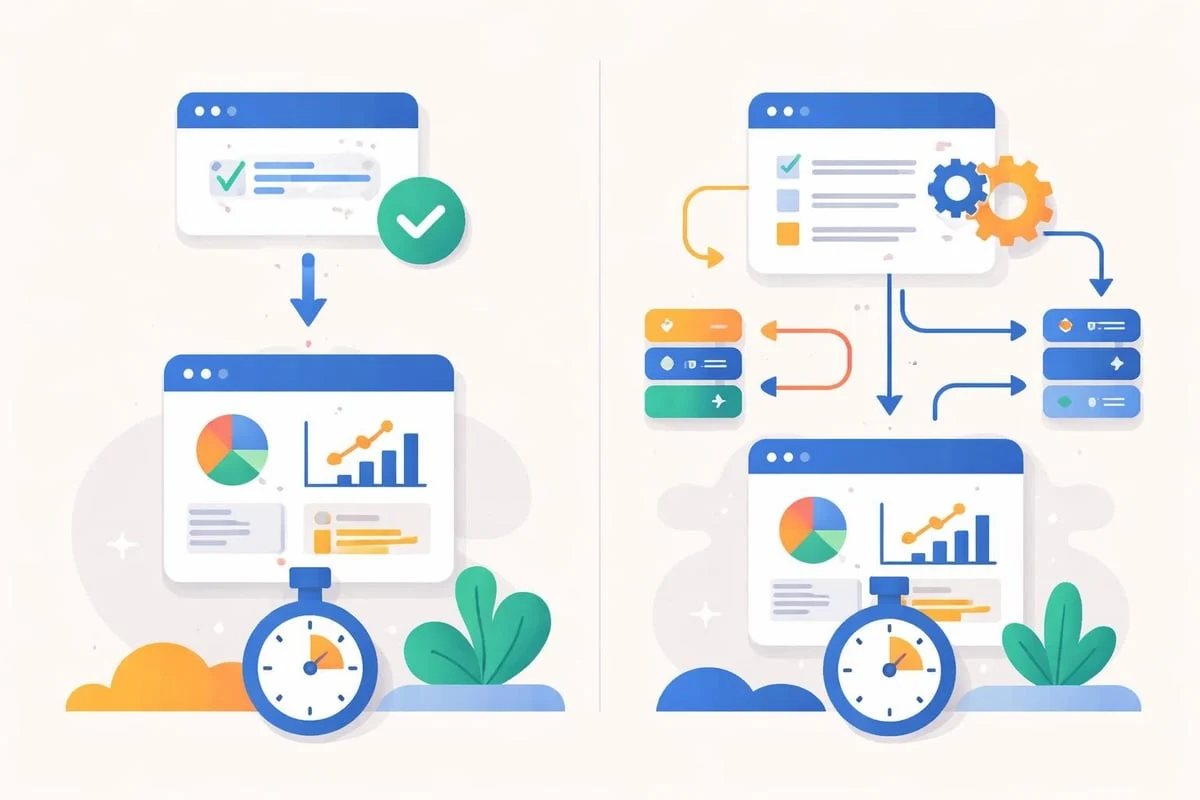
The comparison of analytics platforms reveals significant variation in implementation requirements. Some platforms require extensive configuration, whilst others work immediately after adding a single script tag.
Privacy Compliance Considerations
European businesses must work within a complex set of regulations when selecting analytics tools. A thorough website analytics comparison examines how each platform addresses these legal requirements.
Data Processing Agreements
Every analytics provider processes your visitor data. This creates a data processing relationship that requires proper contractual frameworks. Platforms built with European regulations in mind typically offer:
- Standard Contractual Clauses (SCCs) aligned with current requirements
- Clear data processing agreements without hidden clauses
- Transparent subprocessor lists
- Data protection impact assessment (DPIA) support documentation
The distinction between data controllers and data processors becomes critical here. Some platforms position themselves as processors, making you the controller with full data ownership. Others operate as joint controllers, complicating your compliance obligations.
Cookie Usage and Consent
Traditional analytics tools set multiple cookies for various purposes, triggering consent requirements under ePrivacy regulations. Modern alternatives eliminate this complexity entirely.
Platform Type | Cookies Required | Consent Banner Needed | Data Persistence |
|---|---|---|---|
Legacy platforms | Yes (multiple) | Yes | Long-term |
Cookieless platforms | No | No | Session-only |
Hybrid solutions | Optional | Depends on configuration | Configurable |
Platforms designed for European businesses typically operate without any cookies, using alternative identification methods that don’t require consent. This architectural choice simplifies compliance whilst improving user experience by eliminating intrusive consent banners.
International Data Transfers
Following the Schrems II decision and subsequent regulatory guidance, international data transfers face heightened scrutiny. Your website analytics comparison should verify:
- Whether data ever leaves the European Economic Area
- If US subprocessors access European data
- What supplementary measures protect transferred data
- Whether the platform commits to EU-only processing
Platforms that guarantee 100% EU hosting with no US subprocessors eliminate transfer risks entirely. This architectural commitment provides stronger protection than contractual safeguards applied to inherently global systems.
Cost Structure Analysis
Pricing models vary dramatically across analytics platforms, making cost comparison essential yet challenging. A meaningful website analytics comparison examines total cost of ownership rather than just headline pricing.
Pricing Models
Different platforms employ distinct pricing approaches:
- Visitor-based: Charges scale with monthly visitor volume
- Event-based: Pricing tied to tracked actions or page views
- Site-based: Fixed price per website regardless of traffic
- Feature-tiered: Different capabilities at different price points
- Flat rate: Unlimited usage within reasonable limits
Volume-based pricing can surprise businesses with sudden growth. A website that scales from 50,000 to 500,000 monthly visitors might see analytics costs increase tenfold under visitor-based pricing. Fixed-rate models provide budget predictability but may include usage caps that require careful monitoring.
Hidden Costs
Beyond subscription fees, consider these additional expenses:
- Implementation and integration time
- Training for team members
- Custom development for advanced features
- Data export or migration fees
- Support beyond basic email assistance
Detailed analytics tool comparisons reveal that seemingly expensive platforms sometimes offer better value through inclusive features and superior support, whilst apparently cheap options accumulate costs through add-ons and limitations.
Open Source Versus Proprietary Solutions
The choice between open-source and proprietary platforms represents a fundamental decision in your website analytics comparison. Each approach offers distinct advantages and challenges.
Open Source Advantages
Platforms like Matomo and Open Web Analytics provide complete code access and self-hosting capabilities:
- Full data ownership: Information never leaves your infrastructure
- Customization potential: Modify functionality to exact requirements
- Cost control: No recurring subscription fees (hosting costs apply)
- Community support: Active developer communities provide assistance
- Transparency: Inspect exactly how data collection works
However, self-hosted open-source solutions demand technical expertise. You assume responsibility for server maintenance, security updates, scaling infrastructure, and ensuring uptime. For businesses without dedicated technical teams, these operational demands can outweigh cost savings.
Proprietary Platform Benefits
Commercial platforms offer different value propositions:
- Managed infrastructure: No server management required
- Guaranteed uptime: Service-level agreements protect availability
- Regular updates: New features deploy automatically
- Professional support: Direct assistance when issues arise
- Compliance documentation: Pre-prepared materials for audits
The trade-off involves reduced control and ongoing subscription costs. However, for many European businesses, the operational simplicity justifies the expense.
Performance and Reliability Factors
Analytics platforms must operate reliably without degrading your website performance. These technical considerations significantly impact user experience and data quality.
Script Performance Impact
Every analytics script adds load time to your pages. Modern platforms optimize for minimal impact:
Metric | Legacy Tools | Modern Alternatives |
|---|---|---|
Script size | 45-75 KB | 1-3 KB |
DNS lookups | 2-4 | 1 |
HTTP requests | 3-6 | 1 |
Load time impact | 200-400ms | 10-50ms |
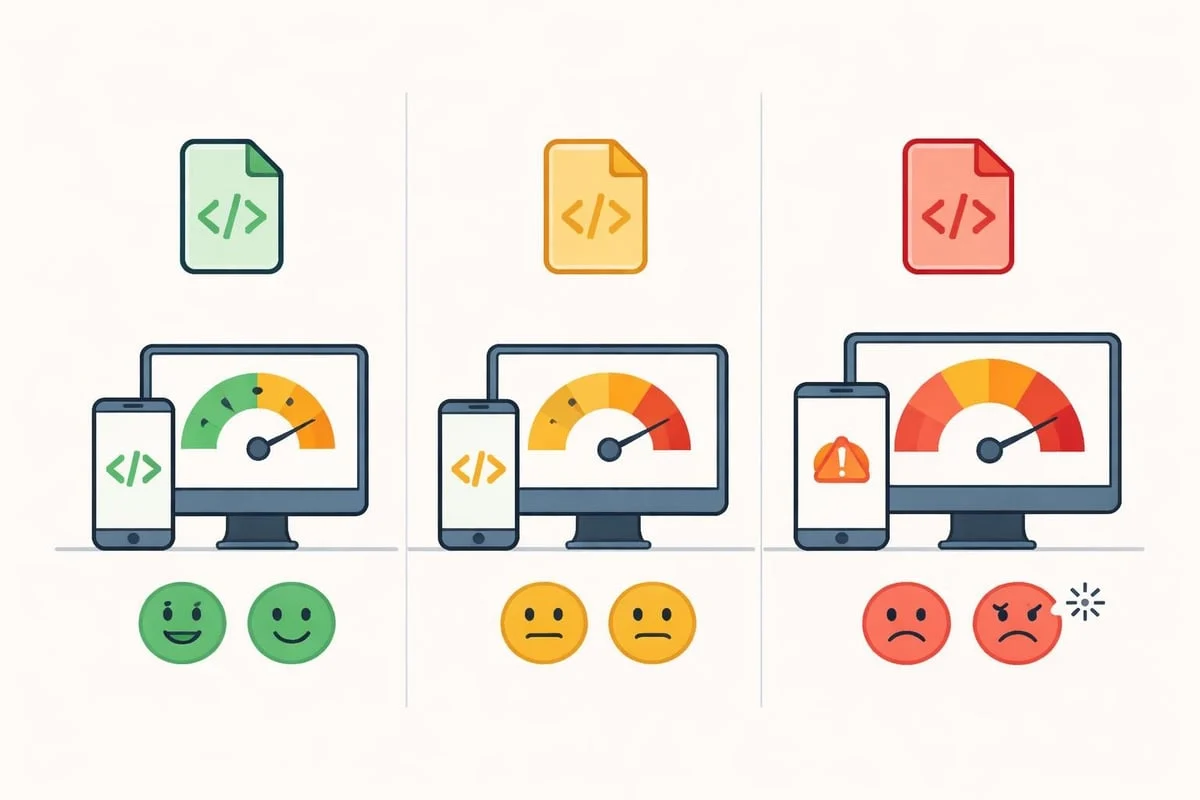
Lighter scripts improve page speed performance, which directly affects search rankings and conversion rates. The difference between a 2KB and 60KB analytics script might seem trivial, but multiplied across millions of page views, it represents significant bandwidth and processing costs.
Data Accuracy and Reliability
Accurate data forms the foundation of good decisions. Your website analytics comparison should examine:
- Bot filtering: Excluding non-human traffic from metrics
- Spam referral blocking: Preventing fake traffic sources
- Ad blocker resilience: Tracking despite browser extensions
- Data processing delays: Time between action and reporting
- Historical data retention: How long information remains accessible
Some platforms achieve higher accuracy through server-side tracking that bypasses client-side blocking. Others sacrifice some precision to enhance privacy protection. Understanding these trade-offs helps set appropriate expectations.
European-Specific Platform Requirements
European businesses face unique requirements that distinguish their website analytics comparison from global evaluations. These region-specific factors deserve particular attention.
For businesses operating exclusively within Europe, platforms hosted in Paris, Frankfurt, or Amsterdam datacentres offer optimal performance alongside regulatory compliance. EU-hosted analytics eliminates latency associated with transatlantic data transfers whilst ensuring information never crosses jurisdictional boundaries.
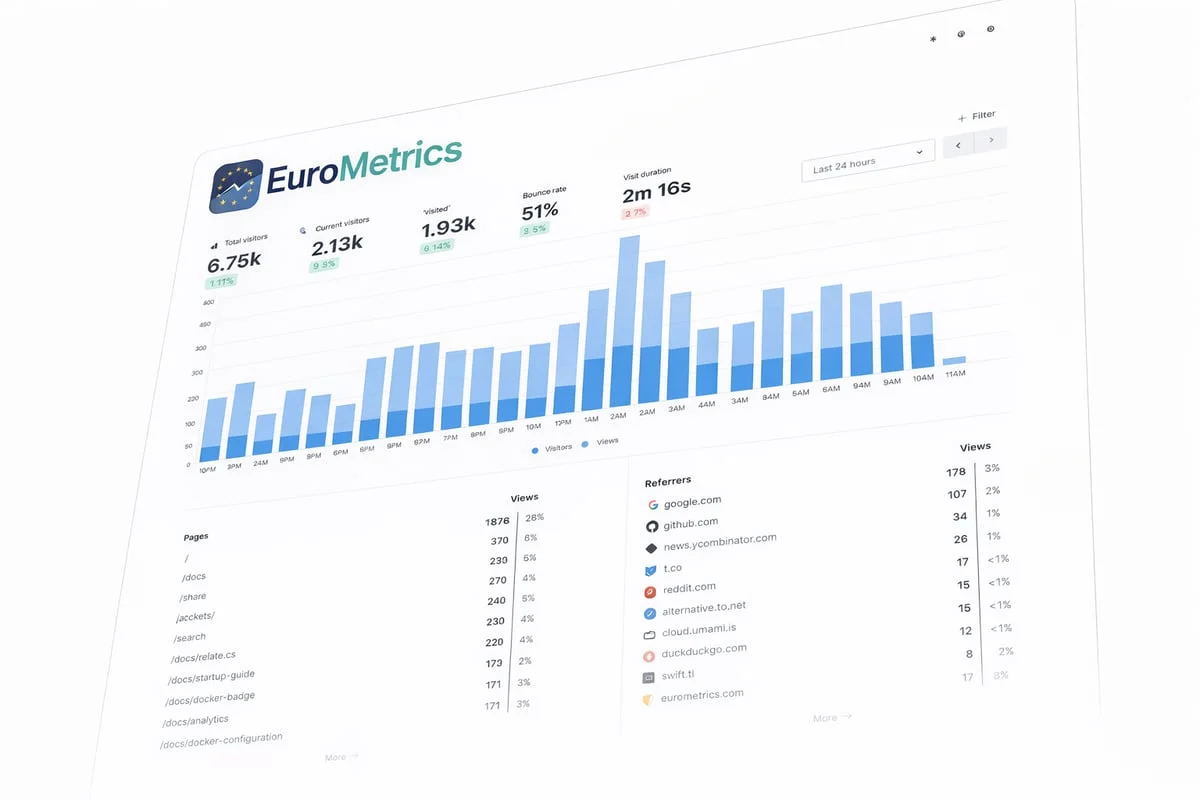
Modern European platforms recognize that businesses need useful insights without complexity. Rather than overwhelming users with hundreds of metrics across dozens of screens, they present essential information through intuitive interfaces. This design philosophy acknowledges that actionable insights matter more than data volume.
The shift away from cookie-based tracking represents more than regulatory compliance. It reflects a fundamental rethinking of how analytics can respect visitor privacy whilst delivering business value. Platforms built on cookieless architecture avoid the performance overhead of consent management systems whilst eliminating the legal uncertainty surrounding cookie usage. European businesses choosing cookieless analytics solutions gain competitive advantages through faster websites and simplified compliance frameworks.
Evaluation Process and Decision Framework
Conducting an effective website analytics comparison requires systematic evaluation rather than superficial feature checklists. This structured approach helps identify the platform that truly fits your requirements.
Assessment Methodology
Begin by defining your specific needs:
- Traffic volume: Current monthly visitors and projected growth
- Team size: Number of people accessing analytics
- Technical expertise: Available development resources
- Compliance priorities: Regulatory requirements and risk tolerance
- Budget constraints: Acceptable cost ranges
- Integration requirements: Existing tools and workflows
Test platforms through trials rather than relying solely on marketing materials. Most providers offer free trials or limited free tiers that allow hands-on evaluation. During testing, focus on:
- Setup complexity: Time from signup to first insights
- Interface usability: Whether your team can navigate without training
- Data accuracy: Comparison with server logs or existing analytics
- Report value: Whether standard reports answer your questions
- Support responsiveness: Quality of assistance during trial period
Making the Final Decision
After narrowing options through testing, consider long-term implications. Academic research on analytics frameworks emphasizes the importance of architectural decisions that affect scalability and compliance over time.
Switching costs increase with time. The longer you use a platform, the more historical data accumulates and the deeper integrations become. Selecting the right solution initially avoids disruptive migrations later.
Create a simple scoring matrix that weights each factor by its importance to you. The scores below are an illustration only: replace Platform A, B and C with the tools on your shortlist and score them after your own trials.
Factor | Weight | Platform A | Platform B | Platform C |
|---|---|---|---|---|
Privacy compliance | 25% | 9/10 | 7/10 | 10/10 |
Ease of use | 20% | 8/10 | 6/10 | 9/10 |
Feature completeness | 15% | 7/10 | 9/10 | 8/10 |
Cost efficiency | 15% | 6/10 | 8/10 | 7/10 |
Performance impact | 15% | 9/10 | 7/10 | 9/10 |
Support quality | 10% | 7/10 | 8/10 | 8/10 |
Weighted scoring provides objective comparison when multiple platforms seem similarly capable. However, numbers shouldn’t override practical considerations like team preference or specific feature requirements.
Implementation Best Practices
After selecting a platform through your website analytics comparison, proper implementation ensures you extract maximum value. These practices apply across most analytics solutions.
Technical Setup
Deploy analytics scripts appropriately based on your site architecture:
- Static sites: Add script tags directly to HTML templates
- WordPress: Use plugin or theme functions rather than manual insertion
- Single-page applications: Implement custom event tracking for route changes
- Server-side rendered: Consider both client and server-side tracking options
Verify installation using browser developer tools before considering setup complete. Check that:
- Scripts load without errors
- Network requests reach analytics servers
- Test page views appear in dashboards
- Timing matches your actions
Event Configuration
Beyond automatic page view tracking, configure custom events for valuable interactions:
- Form submissions and completions
- File downloads and document views
- Video play events and completion rates
- Scroll depth and engagement time
- Add-to-cart and checkout steps
Start with essential events rather than tracking everything possible. You can always add more tracking later, but excessive events clutter reports and complicate analysis.
Team Training and Adoption
Technical implementation means nothing if your team doesn’t use the insights. Ensure adoption through:
- Walkthrough sessions demonstrating key reports
- Documentation of common queries and how to answer them
- Regular review meetings discussing analytics insights
- Clear ownership of metrics and reporting responsibilities
Detailed documentation helps team members find answers independently rather than repeatedly asking the same questions.
Frequently Asked Questions
What’s the most important factor in a website analytics comparison?
For European businesses in 2026, data sovereignty and privacy architecture typically matter most. Whilst features and pricing remain important, selecting a platform that guarantees EU-only hosting with cookieless tracking eliminates significant compliance risks. This foundation allows you to focus on extracting insights rather than managing regulatory concerns.
How do cookieless analytics platforms track returning visitors?
Modern cookieless platforms use privacy-preserving techniques such as hashed IP addresses combined with user agent strings and daily rotating salts. This approach creates temporary session identifiers that allow basic retention analysis without creating persistent tracking profiles. The result provides sufficient accuracy for business decisions whilst respecting visitor privacy and eliminating consent requirements.
Can small businesses benefit from enterprise analytics platforms?
Enterprise platforms often provide capabilities far beyond small business requirements whilst introducing complexity that hinders rather than helps decision-making. Small businesses typically benefit more from simplified platforms offering essential metrics through intuitive interfaces. As detailed in recent analytics tool comparisons, matching platform complexity to organizational needs improves actual usage and insight quality.
What’s the typical cost range for privacy-focused analytics platforms?
European privacy-focused platforms typically range from free tiers supporting small websites to €50-200 monthly for medium-sized businesses. Unlike traditional analytics tools with complex pricing based on data volume, modern alternatives often use straightforward pricing tied to site count or visitor limits. This transparency helps budget accurately and avoid surprise costs as traffic grows.
How long does it take to implement a new analytics platform?
Implementation time varies from minutes to weeks depending on platform complexity and site architecture. Simple script-based solutions can be operational within 30 minutes for basic websites, whilst enterprise platforms requiring custom integration might need several weeks of development work. Most European businesses using modern platforms achieve full implementation within one day, including event configuration and team training.
Should businesses use multiple analytics platforms simultaneously?
Running multiple platforms provides data validation and backup during transitions but creates ongoing overhead. Most businesses find that selecting one primary platform and potentially one specialized tool (such as uptime monitoring or SEO auditing) delivers better value than maintaining redundant analytics systems. The exception involves large organizations with specialized teams requiring different tool capabilities.
Selecting the right analytics platform through systematic website analytics comparison directly impacts your ability to make informed decisions whilst maintaining regulatory compliance. European businesses in 2026 have access to sophisticated platforms that respect visitor privacy without sacrificing insight quality. If you’re ready to move beyond complex legacy analytics platforms to a solution designed specifically for European businesses, EuroMetrics offers cookieless tracking with 100% EU hosting across datacentres in Paris, Frankfurt, and Amsterdam, delivering real-time insights through an intuitive dashboard that requires no technical expertise to operate effectively.