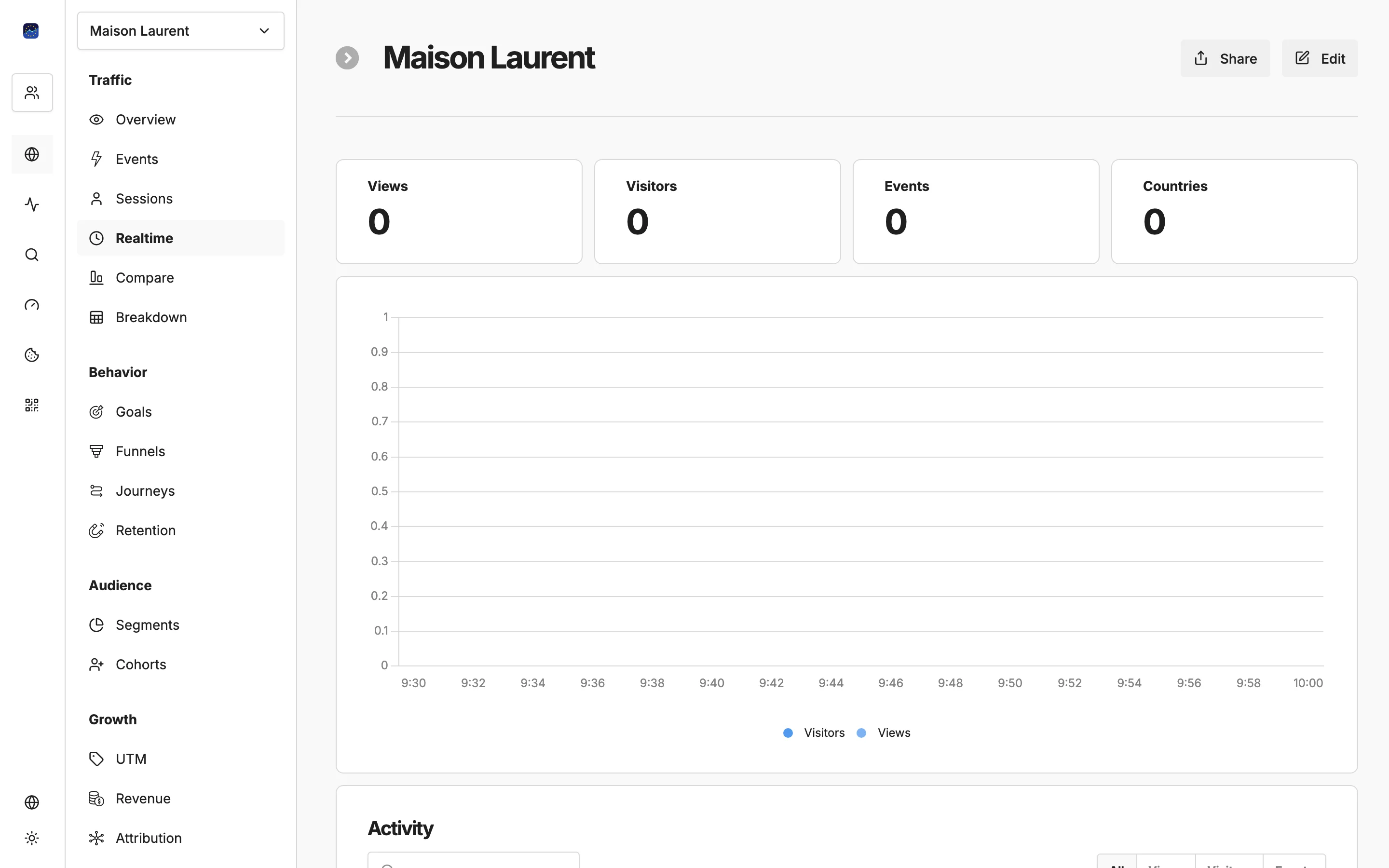
What the real-time view is good for, and when to switch to reports
Use the real-time view to confirm that something you just did is working, and use the regular dashboard to judge whether it worked well. Live numbers answer questions like: is the tracking script installed on the new page, did the newsletter go out, is the link in this morning's post sending anyone. They are a poor basis for conclusions, because a few minutes of traffic says little about a normal day.
The most common use is a launch check. Before you publish, open the real-time view in a second tab. After you publish, load the new page yourself from a phone and watch it appear in active pages. If it does not show up, check that the tracking snippet is on that template before you spend money sending people there. Remember to remove your own visits from the long-term reports later with an IP traffic filter in website settings, since test visits you make during a launch otherwise stay in the totals.
A worked example. You send a newsletter at 10:00 with links tagged by the Campaign URL Builder. Within a minute the referrer panel should start showing the email source, and active pages should show the article you linked. If the live count rises but active pages show only the home page, the link in the email probably points to the wrong address. If the email source never appears while visitors do arrive, the UTM tags were likely stripped or mistyped. Both problems are easy to fix in the first ten minutes and expensive to discover a week later.
The live map and referrer panel are also useful for spotting surprises, such as a sudden wave from one country after a mention in a local publication, or a referrer you have never heard of. Treat these as prompts to look closer, not as results. Once the moment has passed, move to the full dashboard, compare the day with a normal day of the same weekday, and see whether the visitors who arrived stayed, read more pages, or left after one. That comparison, not the live peak, tells you whether the campaign was worth repeating.