
Site page views represent one of the most fundamental metrics in web analytics, yet their interpretation often remains misunderstood by marketing teams and website owners. This metric provides essential insights into how visitors interact with your content, which pages generate the most engagement, and where potential improvements can drive better results. Understanding site page views enables European businesses to make data-driven decisions whilst maintaining full control over their analytics data within GDPR-conscious frameworks.
What Are Site Page Views
A page view occurs each time a visitor loads or reloads a page on your website. Every time someone accesses a URL on your domain, the analytics system registers this interaction as a single page view. This seemingly simple metric forms the foundation of understanding traffic patterns and content performance.
The distinction between page views and unique page views matters considerably. Whilst total page views count every instance of a page loading, unique page views measure how many sessions included at least one view of that specific page. If a visitor loads the same page three times during their session, this registers as three page views but only one unique page view.
How Site Page Views Differ From Other Metrics
Understanding the relationship between various traffic metrics prevents confusion when analysing website performance:
- Page views: Total number of pages loaded, including repeated views
- Sessions: Groups of interactions within a specified time frame
- Unique visitors: Distinct individuals visiting your site
- Bounce rate: Percentage of single-page sessions
- Time on page: Average duration visitors spend viewing content
Traditional analytics platforms often complicate these measurements by relying on cookies and complex tracking mechanisms. Modern cookieless analytics approaches provide accurate page view counts whilst respecting visitor privacy and eliminating the need for consent banners.
Why Site Page Views Matter for Business Growth
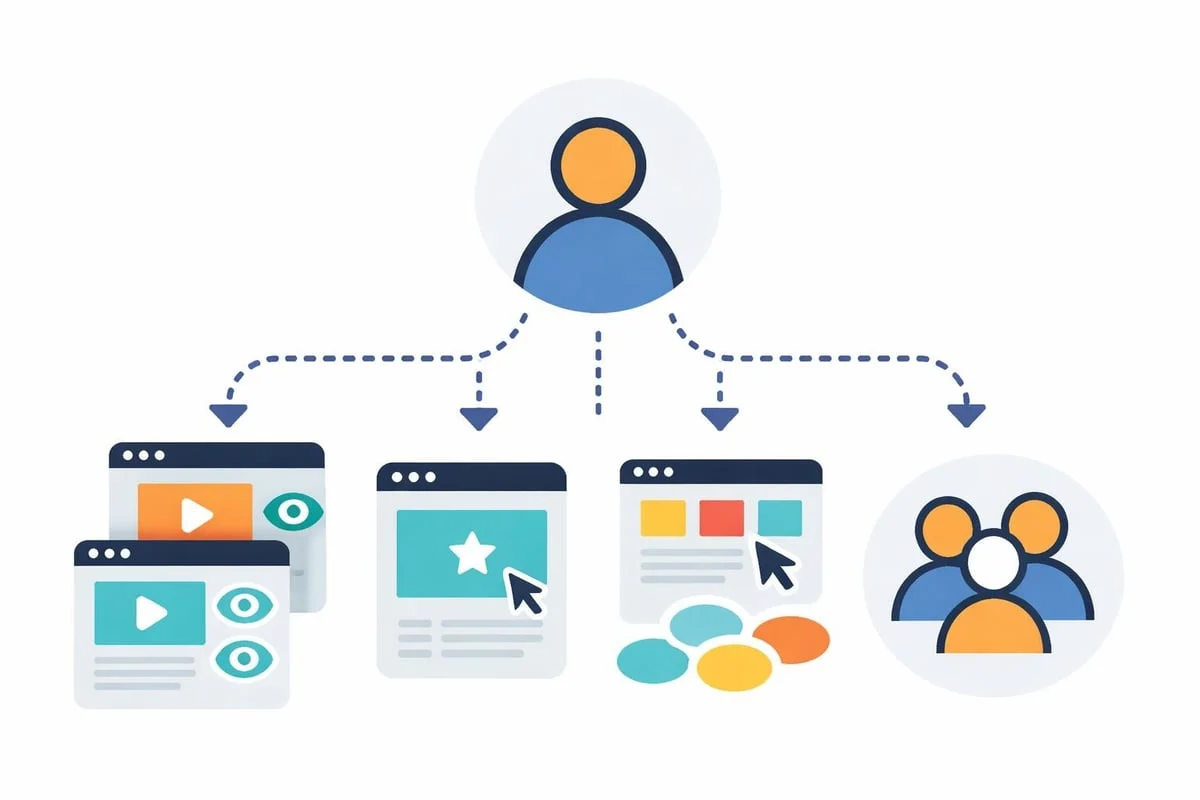
Monitoring site page views provides actionable intelligence about content effectiveness and visitor engagement patterns. This metric reveals which topics resonate with your audience, which landing pages convert effectively, and where navigation improvements could enhance user experience.
High page view counts on specific content indicate strong interest in those topics. E-commerce sites often see higher page views on product pages during successful campaigns, whilst content publishers track page views to measure article popularity and advertising potential.
Identifying Content Performance Patterns
Page view analysis uncovers valuable patterns in how visitors consume your content. By examining which pages accumulate the most views, you identify your strongest assets and understand what draws people to your website.
Consider these analytical approaches:
- Track page views by content category to spot trending topics
- Compare page views across different time periods to identify growth
- Analyse page views alongside engagement metrics like time on page
- Segment page views by traffic source to understand channel effectiveness
- Monitor page views on new content to gauge initial reception
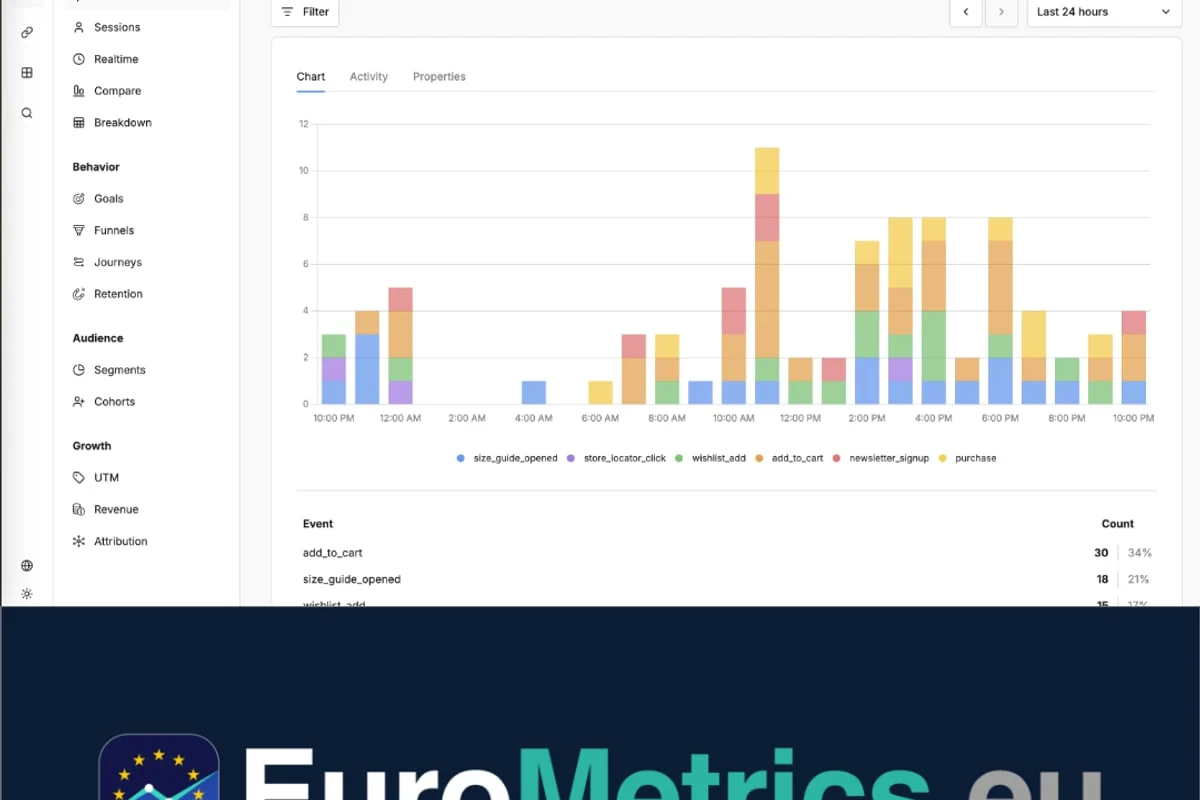
European businesses particularly benefit from real-time analytics that display site page views as they occur, enabling immediate response to traffic spikes or content opportunities.
Tracking Site Page Views Accurately
Accurate measurement requires proper implementation of analytics tracking across all website pages. The tracking mechanism must fire consistently whenever a page loads, regardless of how visitors navigate your site.
Tracking Method | Accuracy | Privacy Impact | Implementation Complexity |
|---|---|---|---|
Cookie-based tracking | High | Requires consent banners | Medium |
Cookieless tracking | High | No consent required | Low |
Server-side tracking | Very high | Minimal | High |
JavaScript-based tracking | High | Varies | Low to medium |
Modern analytics platforms designed with GDPR principles in mind use cookieless tracking that maintains accuracy whilst eliminating privacy concerns. This approach counts site page views without storing personal identifiers or requiring visitor consent.
Common Tracking Implementation Issues
Several factors can compromise the accuracy of your page view data:
Single-page applications (SPAs) require special configuration because traditional page load tracking fails to capture navigation events. Modern frameworks like React, Vue, or Angular need custom event tracking to register page views correctly.
Caching systems may serve pages without triggering analytics code. Ensure your tracking script executes even when browsers or CDNs deliver cached content.
Bot traffic artificially inflates page view counts. Quality analytics platforms filter out automated traffic to provide genuine visitor data. Understanding how to identify bot traffic helps maintain data integrity.

Interpreting Site Page Views Data
Raw page view numbers provide limited value without context and comparative analysis. The metric becomes powerful when you examine trends, patterns, and relationships with other performance indicators.
A sudden spike in site page views might indicate viral content, a successful marketing campaign, or technical issues causing page reloads. Conversely, declining page views could signal content relevance problems, technical difficulties, or increased competition.
Benchmarking and Goal Setting
Establishing meaningful benchmarks helps you understand whether your site page views represent strong performance. Industry averages vary dramatically based on sector, content type, and business model.
Consider these benchmark factors:
- Content publishers: Often target hundreds of thousands of monthly page views
- E-commerce sites: Focus on product page views relative to conversions
- B2B websites: May prioritise depth (pages per session) over volume
- Local businesses: Typically see lower overall volumes but higher conversion rates
Analysing page views effectively requires understanding your specific business context rather than chasing arbitrary numbers.
Using Site Page Views to Optimise Content Strategy
Page view data directly informs content creation and optimisation decisions. By identifying which topics generate the most engagement, you can double down on successful themes whilst reconsidering underperforming content.
Examining the relationship between page views and conversions reveals which content types drive business results. High page views without corresponding conversions suggest engagement without commercial intent, whilst lower page views with strong conversion rates indicate highly targeted content.
Content Performance Analysis Framework
Content Type | Expected Page Views | Primary Goal | Success Metrics |
|---|---|---|---|
Blog posts | Variable, trend-dependent | Traffic, awareness | Page views, social shares |
Product pages | Moderate, stable | Conversions | Conversion rate, revenue |
Landing pages | Campaign-dependent | Lead generation | Form submissions, CTR |
Resource pages | Steady, growing | Authority, backlinks | Time on page, downloads |
Understanding these patterns enables strategic resource allocation. Invest more effort in content formats that generate sustainable page views and align with business objectives.
For European businesses prioritising data sovereignty, choosing analytics tools that store all visitor data exclusively within EU data centres ensures compliance whilst providing complete page view tracking. Web Analytics for European Businesses offers complete tracking with zero cookies and full digital sovereignty, ensuring your page view data never leaves European infrastructure.
Segmenting Site Page Views for Deeper Insights
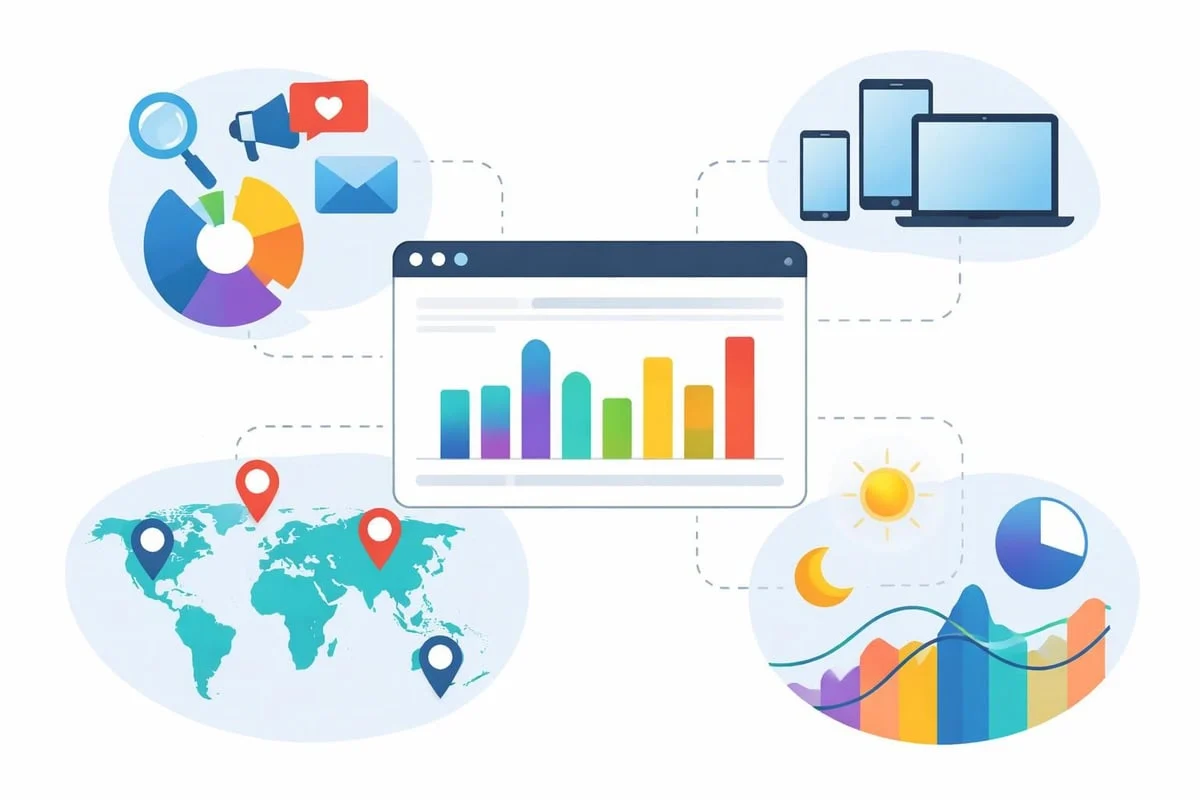
Breaking down aggregate page views by various dimensions reveals nuanced patterns that total numbers obscure. Segmentation transforms raw data into actionable intelligence about different visitor groups and behaviours.
Key Segmentation Dimensions
Traffic source segmentation shows whether page views originate from organic search, social media, direct visits, or referral links. This reveals which channels drive the most engagement and where marketing investments yield returns.
Device segmentation distinguishes between mobile, tablet, and desktop page views. Mobile-first content strategies require understanding how page views distribute across devices and whether mobile visitors engage differently than desktop users.
Geographic segmentation proves particularly valuable for European businesses serving multiple markets. Analysing page views by country highlights regional content preferences and expansion opportunities.
Time-based segmentation identifies when your audience actively consumes content:
- Hour of day patterns reveal optimal posting times
- Day of week trends show engagement cycles
- Seasonal variations inform content calendars
- Year-over-year comparisons track growth trajectories
Understanding visitor data segmentation enables personalised content strategies that resonate with specific audience segments.
Site Page Views and SEO Performance
Search engine optimisation and page view metrics maintain a symbiotic relationship. Strong organic rankings drive page views, whilst engagement signals from page view patterns potentially influence future rankings.
Pages receiving consistent page views from organic search demonstrate content relevance and search intent alignment. Search engines interpret this engagement as a quality signal, potentially reinforcing rankings.
Optimising High-Traffic Pages
Pages already generating substantial site page views represent your strongest SEO assets. These pages deserve ongoing optimisation to maintain and strengthen their performance:
- Update content regularly to maintain freshness and relevance
- Improve page speed to reduce bounce rates and improve user experience
- Enhance internal linking to distribute authority and guide visitors
- Optimise metadata to improve click-through rates from search results
- Add multimedia elements to increase engagement and time on page
Testing your page speed from EU servers ensures optimal performance for European visitors who generate your page views.
Combining Site Page Views With Conversion Tracking
Page views alone don't tell the complete business story. Connecting page views to conversion events reveals which traffic genuinely contributes to business objectives.
Calculate page-to-conversion ratios to understand content effectiveness:
- E-commerce: Page views per transaction
- Lead generation: Page views per form submission
- SaaS: Page views per trial signup
- Content sites: Page views per newsletter subscription
Low ratios indicate highly efficient conversion paths, whilst high ratios suggest friction or misalignment between content and conversion goals.
Attribution and Page View Value
Advanced analytics assigns monetary value to page views by connecting them to revenue events. This calculation enables ROI measurement for content marketing and helps prioritise optimisation efforts.
Pages that consistently appear in conversion paths deserve investment even if they don't directly generate conversions. These "assist" pages facilitate the customer journey and contribute indirectly to revenue.
Privacy-Conscious Page View Tracking
European businesses face unique considerations when tracking site page views. Regulations designed to protect visitor privacy impact how you collect and store analytics data.
Cookie-based tracking systems require consent banners that reduce data completeness. Many visitors decline tracking, creating blind spots in your page view data. This partial visibility compromises decision-making and trend analysis.
Cookieless tracking technologies maintain full coverage whilst respecting privacy preferences. These systems count every page view without storing personal identifiers or requiring consent mechanisms.
Technical Implementation Considerations
Server-side tracking processes page view events on your infrastructure rather than visitor browsers. This approach offers maximum control and privacy compliance but requires technical expertise.
Privacy-first JavaScript tracking uses ephemeral identifiers and aggregated data to track page views without persistent cookies. This balance maintains usability whilst prioritising privacy.
First-party data collection keeps all page view information under your direct control. Data stored exclusively in European data centres with no US subprocessors ensures complete sovereignty over analytics.
Understanding your cookie footprint helps ensure compliance whilst maintaining accurate page view tracking.
Frequently Asked Questions
What's the difference between a page view and a session?
A page view represents a single page loading, whilst a session encompasses all interactions during a visit. One session typically contains multiple page views as visitors navigate through your website. Sessions end after a period of inactivity (usually 30 minutes) or at midnight, whilst page views occur instantaneously when pages load.
How many page views should my website get?
Appropriate page view volumes vary dramatically based on your industry, business model, and marketing efforts. A local service business might consider 1,000 monthly page views successful, whilst a content publisher needs hundreds of thousands. Focus on growth trends and conversion rates rather than absolute numbers, and benchmark against competitors in your specific niche.
Can site page views be tracked without cookies?
Yes, modern analytics platforms track page views accurately without cookies using privacy-conscious technologies. Cookieless tracking methods identify sessions through temporary browser fingerprints, IP hashing, or session storage that don't persist between visits. This approach maintains measurement accuracy whilst eliminating privacy concerns and consent requirements.
Why do my page views fluctuate so much?
Page view fluctuations stem from various factors including seasonal trends, marketing campaign timing, search engine algorithm updates, and day-of-week patterns. Content virality, competitor actions, and external events also impact traffic. Regular fluctuations following predictable patterns indicate normal behaviour, whilst sudden unexpected changes warrant investigation into technical issues or bot traffic.
How do single-page applications affect page view tracking?
Traditional page view tracking breaks in single-page applications because navigation doesn't trigger full page reloads. SPAs require custom event tracking that fires analytics events when the URL changes or specific user interactions occur. Properly configured analytics platforms detect these navigation events and count them as page views, maintaining accurate measurement despite the technical differences.
Should I focus on total page views or unique page views?
Both metrics provide valuable but different insights. Total page views indicate overall content consumption and engagement depth, whilst unique page views measure reach and individual content performance. Use total page views to understand engagement intensity and unique page views to assess content appeal. Comparing both reveals whether visitors repeatedly view the same pages or explore broadly across your site.
Understanding site page views provides the foundation for data-driven website optimisation and content strategy. By accurately tracking this essential metric, segmenting it meaningfully, and connecting it to business outcomes, you transform raw numbers into actionable insights that drive growth. EuroMetrics delivers full page view tracking with complete data sovereignty, storing all analytics exclusively in European data centres whilst providing the simplicity and real-time insights you need without the complexity of legacy analytics platforms.